
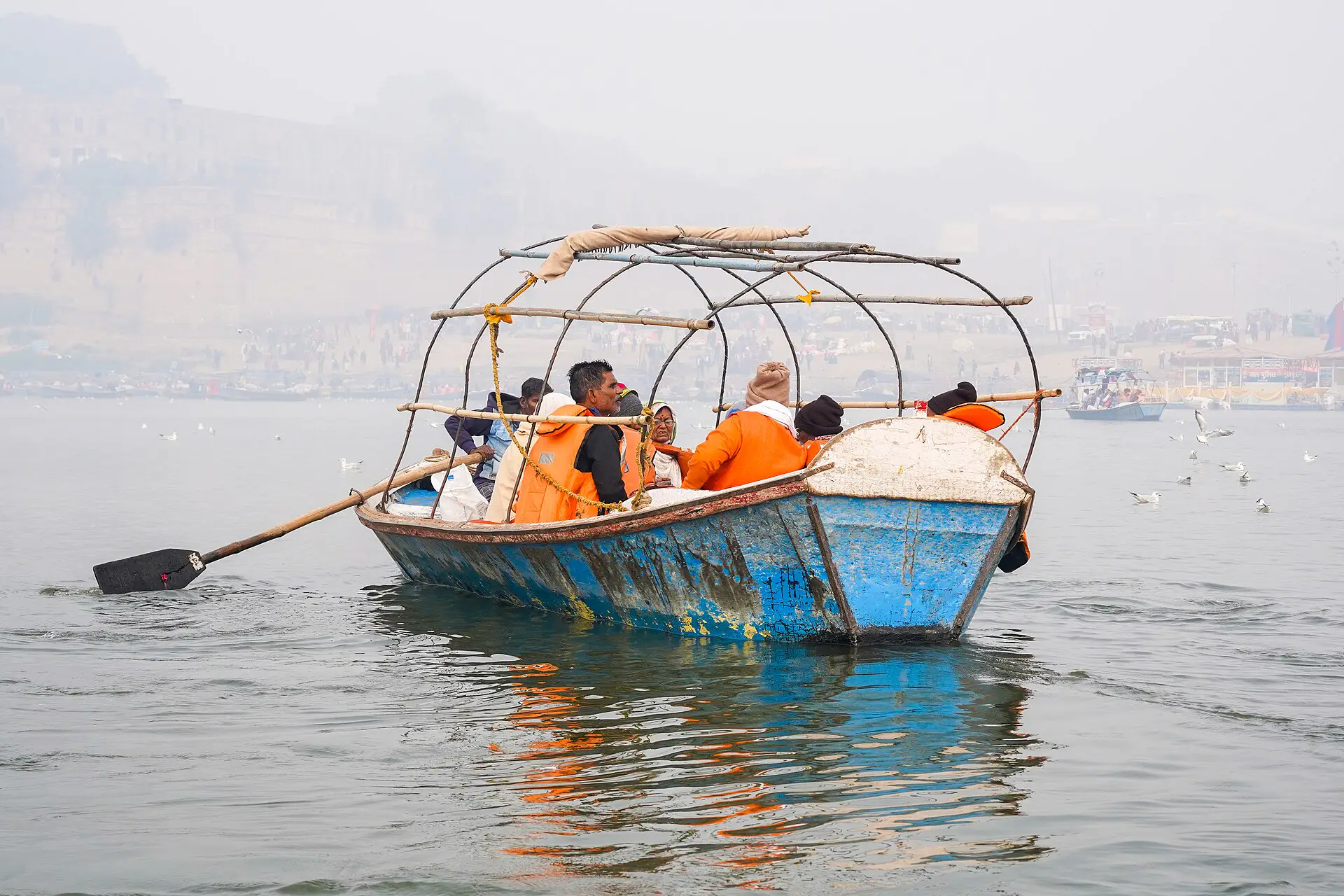
For a pilgrim, this is the most convenient part of Prayagraj for a dawn snan and boat ride. The area is transformed during the Magh Mela each winter and during the Kumbh, when tent cities spread across the floodplain and road access is tightly controlled. Outside those times it is a working neighbourhood with simple stays.
What the area is like
Daraganj sits on higher ground overlooking the Ganga, with the long road bridge towards Jhunsi passing nearby. Down below, the Sangam area is a wide sandbank whose shape changes with the river every year. Boats leave from several points near the fort and the ghats to take pilgrims out to the confluence itself.
- Go early for the snan; boats get busier as the morning goes on
- Agree the boat fare and route before boarding, and keep children seated
- The Bade Hanuman Ji temple, with its reclining idol, is close to the fort and worth combining
- During the monsoon, high water can flood low-lying areas and limit boat services
Staying near the Sangam
Options include dharamshalas, ashrams, simple guest houses and, during the Mela, camp and tent accommodation on the riverbank. Comfort levels vary a lot. SwagatGo does not list hotels, but we can help you choose between a riverside stay and a more comfortable base in Civil Lines.
Getting around from here
The Sangam boat points, Bade Hanuman Ji and the fort are all within a short ride, typically 5 to 15 minutes. Shankar Viman Mandapam is nearby on the Sangam side. Civil Lines is usually 20 to 30 minutes by road, and Prayagraj Junction around 20 to 35 minutes depending on traffic. During the Mela, expect vehicle bans and long walks.
Food and daily needs
Tea stalls, puri-sabzi, kachori and sweet shops serve pilgrims from early morning. Puja items, flowers and containers for Ganga jal are sold near the ghats. For a wider choice of restaurants, ATMs and chemists, the larger roads towards Civil Lines and the old city are better supplied.
Temples and places near Sangam and Daraganj
- Spiritual 2–3 hours
Triveni Sangam
The confluence of the Ganga and Yamuna, reached by boat from the ghats near the Fort for a holy dip or prayers.
Why it is specialHindu tradition calls Prayag Tirtharaj, the king of pilgrimage places. The meeting of the Ganga, the Yamuna and the unseen Saraswati is the focus of the Kumbh and Magh Melas, among the largest religious gatherings in the world.
Sangam Kshetra, near Prayagraj FortModerate walkingEarly morning is calmer and cooler. River levels change with the season and boat fares are negotiated, so agree before boarding. Restrictions apply in Mela periods.
- Temple 30–60 minutes
Bade Hanuman Ji Temple
A well-known temple with a large reclining Hanuman image, close to the Sangam and visited by almost every pilgrim.
Why it is specialThe image lies on its back, partly below ground level, which is rare for Hanuman. Devotees believe that when the Ganga rises and reaches the idol, Mother Ganga is touching Hanuman's feet, so the flood is greeted as auspicious.
Near Sangam, PrayagrajEasy walkingIn high-flood years the lower areas near the river can be affected. Tuesdays and Saturdays are busier.
- Temple 30–45 minutes
Nag Vasuki Temple
An old temple to Vasuki, king of the serpents, on a high bank of the Ganga at Daraganj, north of the Sangam.
Why it is specialIt is one of the few temples devoted to Vasuki, the serpent used as the churning rope in the Samudra Manthan. Devotees traditionally see a visit here as completing the Prayag pilgrimage, and Nag Panchami draws large crowds.
Daraganj, PrayagrajModerate walkingBusiest around Nag Panchami and during the Mela. There are some steps from the road, and the lanes of Daraganj are narrow.
- Heritage 1 hour
Prayagraj Fort and Akshayavat
A large sixteenth-century Mughal fort on the Yamuna, associated with the Patalpuri temple and the Akshayavat tree.
Why it is specialAkbar built the fort in the 1580s at the confluence. Within its walls are the Akshayavat, the 'imperishable banyan' of tradition, the underground Patalpuri temple, and an Ashokan pillar that also carries Samudragupta's famous inscription.
Sangam KshetraModerate walkingMuch of the fort is under military control and public access is limited. Check what is open before planning.
- Temple 30–45 minutes
Shankar Viman Mandapam
A tall multi-tiered temple in South Indian style near the Sangam, with sculpted panels and a calm setting.
Why it is specialDedicated to Adi Shankaracharya and linked with the Kanchi Kamakoti Peetham, it brings South Indian temple architecture to the Sangam. Its storeys hold separate shrines, including Kamakshi Devi and Balaji, and the upper floors look out over the rivers.
Near Sangam, PrayagrajEasy walking
Other areas to stay in Prayagraj
Civil Lines
Best for: Comfort, business visitors and families
The most orderly part of the city, with wide roads, restaurants, markets and better access to museums. A short drive from the station and from the Sangam.
Nearby: Anand Bhawan and Swaraj Bhawan · Allahabad Museum · Chandrashekhar Azad Park
Civil Lines area guide →Near Prayagraj Junction
Best for: Rail arrivals and early departures
Hotels around the station suit late trains and quick transits, though lanes are busy and noisy.
Nearby: Prayagraj Junction Railway Station · Khusro Bagh
Sangam and Fort side
Best for: Snan pilgrims and Mela visitors
Stays close to the Sangam save time on early-morning snan but are limited in number and fill fast during Magh Mela.
Nearby: Triveni Sangam · Bade Hanuman Ji Temple · Prayagraj Fort and Akshayavat
Old city and Chowk
Best for: Budget travellers and market lovers
Atmospheric, with temples and markets nearby, but streets are narrow and parking is limited.
Nearby: Mankameshwar Temple · Alopi Devi Mandir
Chowk area guide →Frequently asked questions
How early should I go to the Sangam?
Early morning is best, both for the atmosphere and to avoid queues for boats. Sunrise is the most popular time for snan.
Is Daraganj a good place to stay during the Magh Mela?
It is very close to the action, but crowds and road restrictions are intense. Book early and expect to walk a lot, as vehicles are often stopped well away from the ghats.
Can elderly pilgrims manage the Sangam boat ride?
Most can, with help getting in and out of the boat. Choose a calm time of day, wear secure footwear for the sand and avoid peak bathing days if possible.