
AreaSangam Kshetra
Time needed1 hour
WalkingModerate
Why it is specialAkbar built the fort in the 1580s at the confluence. Within its walls are the Akshayavat, the 'imperishable banyan' of tradition, the underground Patalpuri temple, and an Ashokan pillar that also carries Samudragupta's famous inscription.
Much of the fort is under military control and public access is limited. Check what is open before planning.
About Prayagraj Fort and Akshayavat
A large sixteenth-century Mughal fort on the Yamuna, associated with the Patalpuri temple and the Akshayavat tree.
Akbar built the fort in the 1580s at the confluence. Within its walls are the Akshayavat, the 'imperishable banyan' of tradition, the underground Patalpuri temple, and an Ashokan pillar that also carries Samudragupta's famous inscription.
Planning your visit
Much of the fort is under military control and public access is limited. Check what is open before planning.
- Where: Sangam Kshetra, Prayagraj
- Time to allow: 1 hour
- Walking: Expect a moderate amount of walking, some steps or uneven ground. Most seniors manage with breaks and good footwear.
Where to stay near Prayagraj Fort and Akshayavat
Sangam and Fort side is a practical base for this visit. Best for: snan pilgrims and Mela visitors.
Stays close to the Sangam save time on early-morning snan but are limited in number and fill fast during Magh Mela.
Combine Prayagraj Fort and Akshayavat with
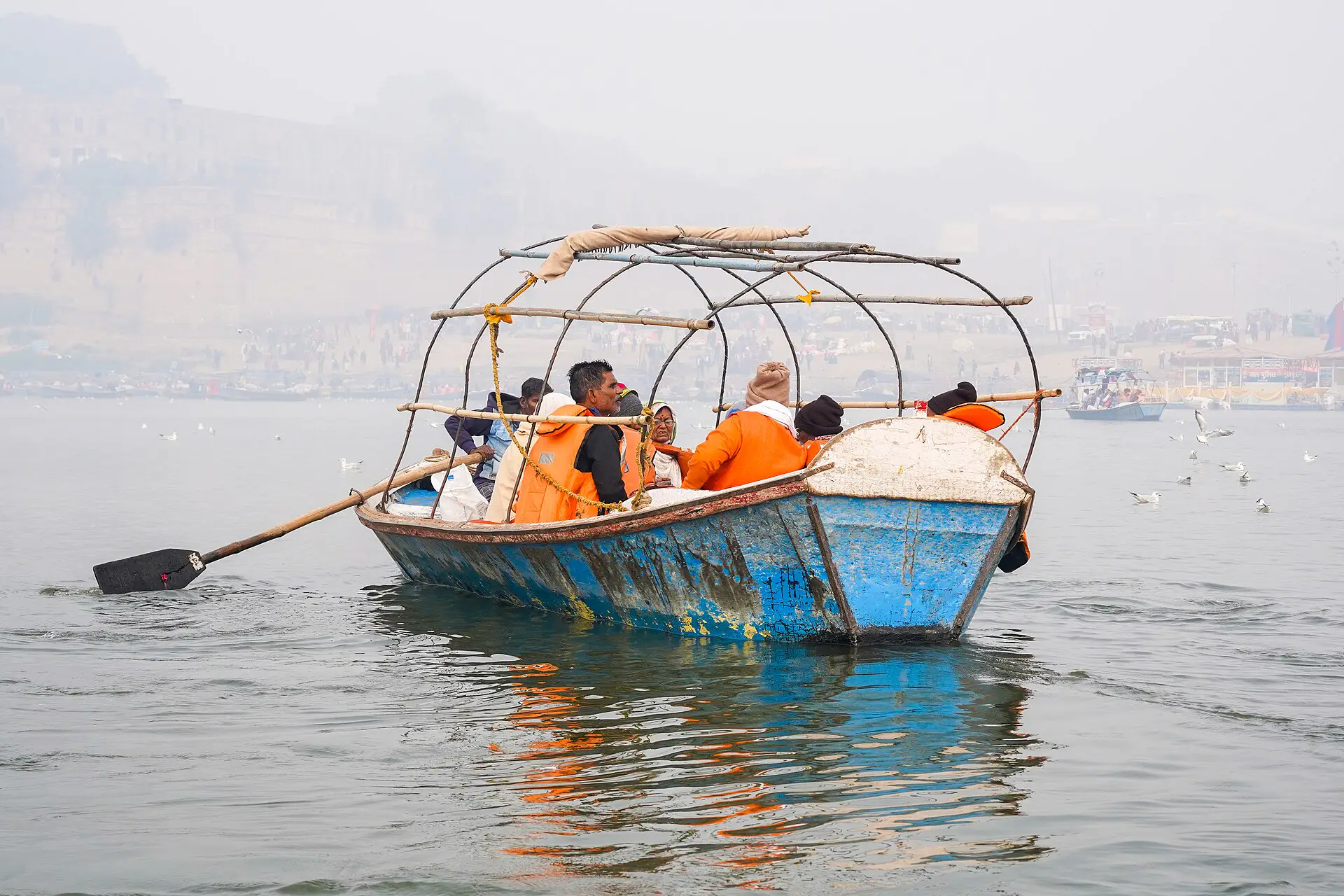
- Triveni Sangam: The confluence of the Ganga and Yamuna, reached by boat from the ghats near the Fort for a holy dip or prayers.
- Bade Hanuman Ji Temple: A well-known temple with a large reclining Hanuman image, close to the Sangam and visited by almost every pilgrim.
- Anand Bhawan and Swaraj Bhawan: The Nehru family home and an adjacent house, now museums on the freedom struggle and family history.
- Allahabad Museum: A large museum with sculpture, terracotta, paintings and a section on modern Indian history, set in Chandrashekhar Azad Park.
Area guides near Prayagraj Fort and Akshayavat
Where to stay and how to get around in the localities closest to this place.
Nearby places worth adding
- Spiritual 2–3 hours
Triveni Sangam
The confluence of the Ganga and Yamuna, reached by boat from the ghats near the Fort for a holy dip or prayers.
Why it is specialHindu tradition calls Prayag Tirtharaj, the king of pilgrimage places. The meeting of the Ganga, the Yamuna and the unseen Saraswati is the focus of the Kumbh and Magh Melas, among the largest religious gatherings in the world.
Sangam Kshetra, near Prayagraj FortModerate walkingEarly morning is calmer and cooler. River levels change with the season and boat fares are negotiated, so agree before boarding. Restrictions apply in Mela periods.
- Temple 30–60 minutes
Bade Hanuman Ji Temple
A well-known temple with a large reclining Hanuman image, close to the Sangam and visited by almost every pilgrim.
Why it is specialThe image lies on its back, partly below ground level, which is rare for Hanuman. Devotees believe that when the Ganga rises and reaches the idol, Mother Ganga is touching Hanuman's feet, so the flood is greeted as auspicious.
Near Sangam, PrayagrajEasy walkingIn high-flood years the lower areas near the river can be affected. Tuesdays and Saturdays are busier.
- Museum 1.5–2 hours
Anand Bhawan and Swaraj Bhawan
The Nehru family home and an adjacent house, now museums on the freedom struggle and family history.
Why it is specialAnand Bhawan was the Nehru family home and a meeting place for leaders of the freedom movement. The older house, renamed Swaraj Bhawan and given to the Indian National Congress, is where Indira Gandhi was born.
Civil Lines area, PrayagrajEasy walkingCheck weekly closing days and entry rules before you go.
- Museum 1.5–2 hours
Allahabad Museum
A large museum with sculpture, terracotta, paintings and a section on modern Indian history, set in Chandrashekhar Azad Park.
Why it is specialOne of India's major museums, it is known for early terracotta and sculpture from Kaushambi and other sites in the region, miniature paintings, works by Nicholas Roerich, and freedom-movement memorabilia including Chandrashekhar Azad's pistol.
Civil Lines, PrayagrajEasy walkingCheck opening days and ticket rules before visiting.
Frequently asked questions
Where is Prayagraj Fort and Akshayavat?
Prayagraj Fort and Akshayavat is in Sangam Kshetra, Prayagraj, Uttar Pradesh. We can include it in a Prayagraj sightseeing day with a private car and driver.
Why is Prayagraj Fort and Akshayavat important?
Akbar built the fort in the 1580s at the confluence. Within its walls are the Akshayavat, the 'imperishable banyan' of tradition, the underground Patalpuri temple, and an Ashokan pillar that also carries Samudragupta's famous inscription.
How much time do I need at Prayagraj Fort and Akshayavat?
Allow 1 hour. Festival days, weekends and holidays can take longer because of crowds.
Is Prayagraj Fort and Akshayavat suitable for senior citizens?
Expect a moderate amount of walking, some steps or uneven ground. Most seniors manage with breaks and good footwear.