
Uttar Pradesh · Vrindavana · Brindavan · Vrindaban
Vrindavan: Banke Bihari, Prem Mandir and the Temple Town of Braj
A temple town of devotion, kirtan and Krishna's youth
Welcome to Vrindavan
Vrindavan is the devotional heart of Braj. Where Mathura is the birthplace, Vrindavan is the place of Krishna's youth, and the town feels organised around worship, with temples, ashrams and kirtan in nearly every lane.
Visitors come for Banke Bihari Temple, the evening splendour of Prem Mandir, the ISKCON temple at Raman Reti, and the older Goswami temples. Many also walk the parikrama marg that circles the town, or spend quiet time at the Yamuna ghats.
Vrindavan is about 12 to 15 km from Mathura and is often visited together with it. The practical notes matter here: crowds are heavy, lanes are narrow, and monkeys are common, so SwagatGo helps you plan stays and darshan days with these realities in mind.
Why visit
Why visit Vrindavan?
- 01
A town built around bhakti
Daily life revolves around temples, bhajan and seva, giving Vrindavan an atmosphere that is different from any other pilgrim town.
- 02
Varied temple experiences
From the intimate, crowded darshan at Banke Bihari to the open, illuminated spaces of Prem Mandir and the international ISKCON community, each temple feels distinct.
- 03
Parikrama and kirtan
Walking the parikrama marg and joining evening kirtan are quiet pleasures beyond temple queues.
- 04
Close to Mathura
It sits a short drive from Mathura's Janmabhoomi, ghats and rail hub, so both can be combined comfortably.
Temples & attractions
Famous temples and places to visit in Vrindavan
- Temple 1.5 to 3 hours including queues
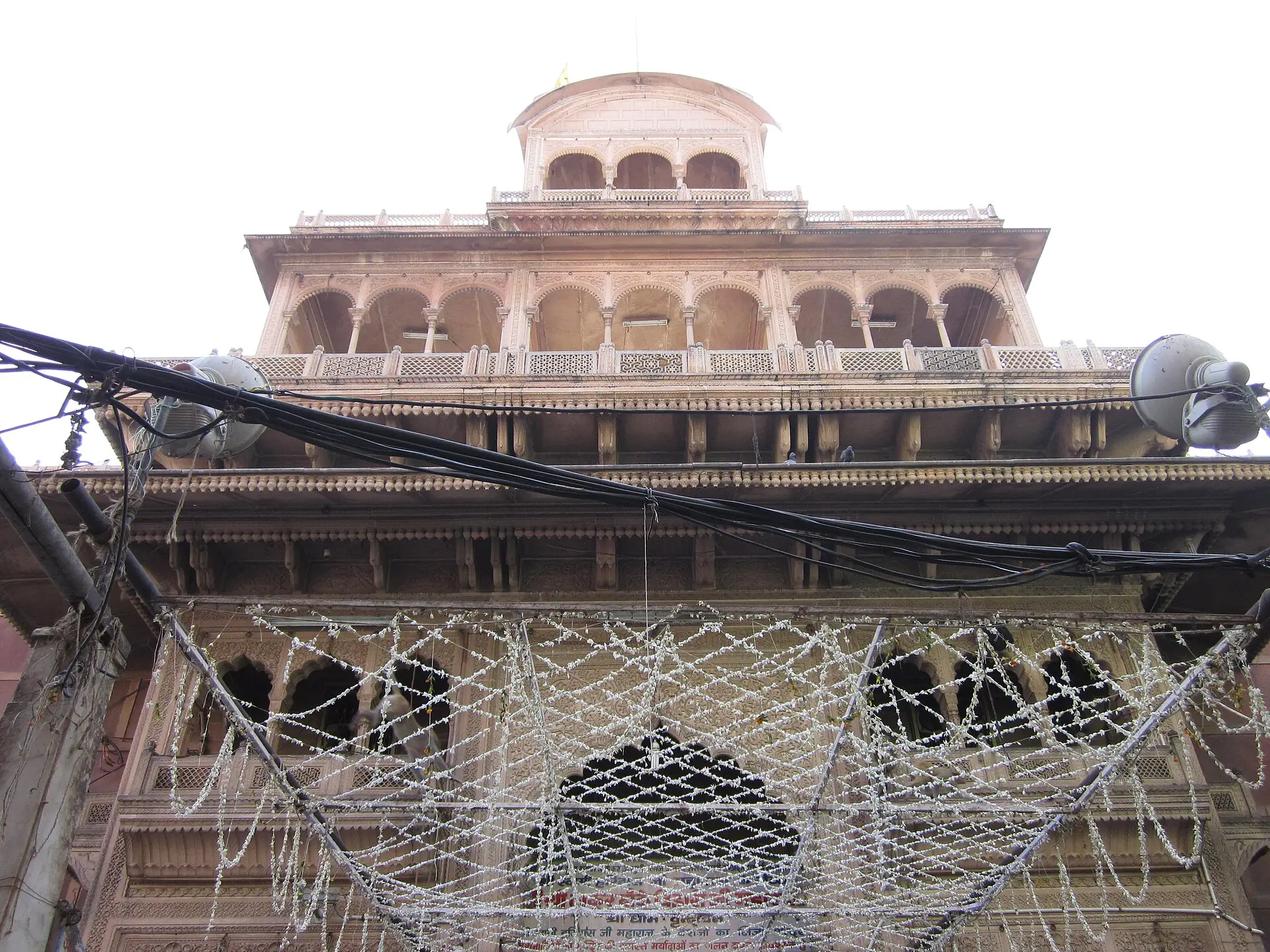
Banke Bihari Temple
Vrindavan's best-loved temple, known for the deity's curtained darshan and an intense, devotional atmosphere.
Why it is specialThe deity was revealed by the sixteenth-century musician-saint Swami Haridas at Nidhivan. Devotees believe Banke Bihari's gaze is so powerful that a curtain is drawn every few moments, which gives darshan here its unique rhythm.
Old Vrindavan, Banke Bihari laneModerate walkingVery crowded, with narrow approach lanes and sharp surges. Seniors and small children need care, and timings change by season, so check before travel. Secure phones, spectacles and bags against monkeys and pickpockets.
- Temple 1.5 to 2 hours
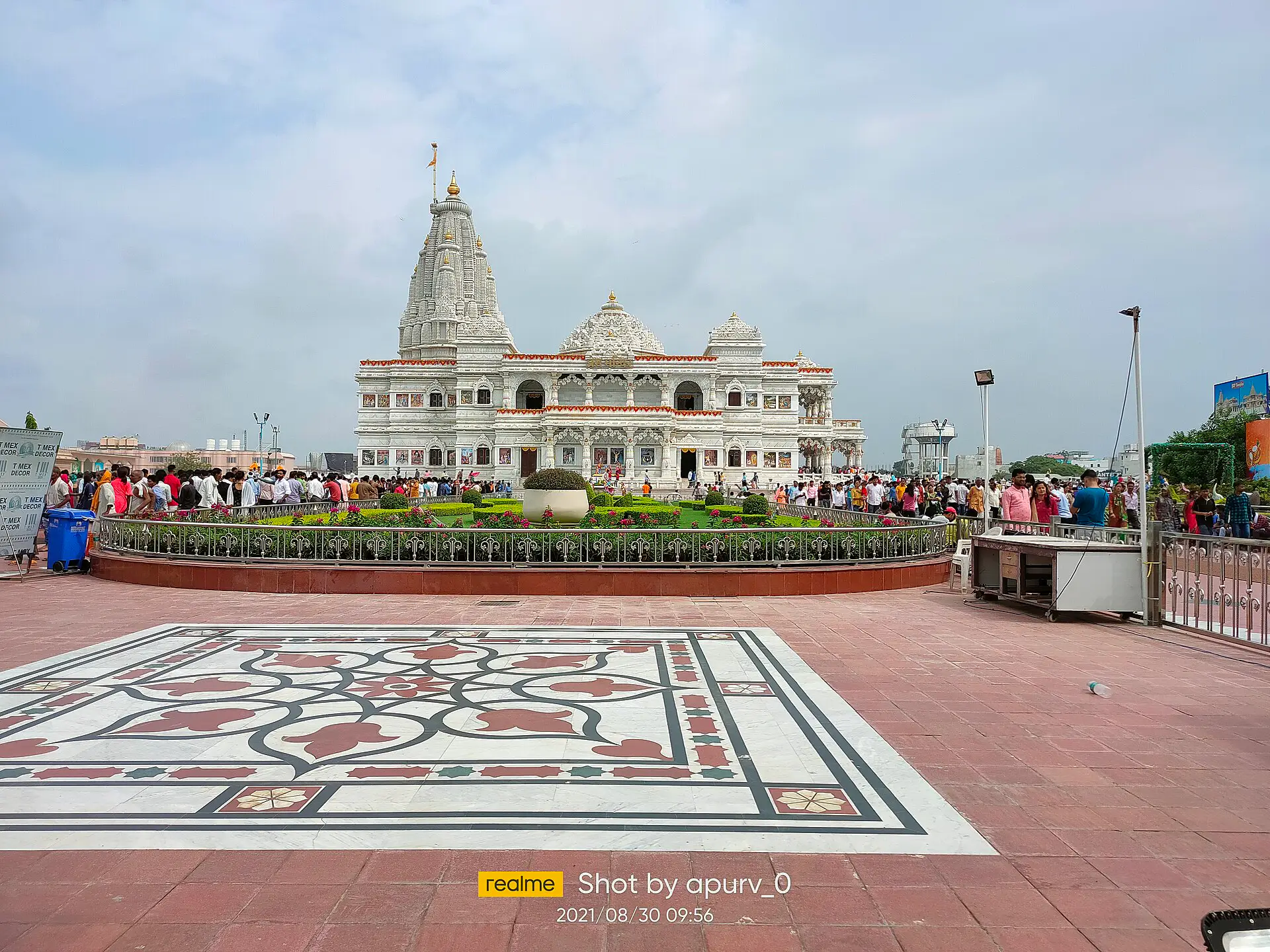
Prem Mandir
A modern white marble temple with carved panels and landscaped grounds, best known for its evening illumination.
Why it is specialOpened in 2012 by Jagadguru Kripalu Parishat, the temple founded by Kripalu Maharaj, it is dedicated to Radha Krishna and Sita Ram. Its carved marble panels and lit tableaux retell Krishna leelas such as the lifting of Govardhan.
Chhatikara RoadEasy walkingEvenings are the most atmospheric and the most crowded. Footwear and phone arrangements vary, so confirm on arrival.
- Temple 1.5 to 2 hours
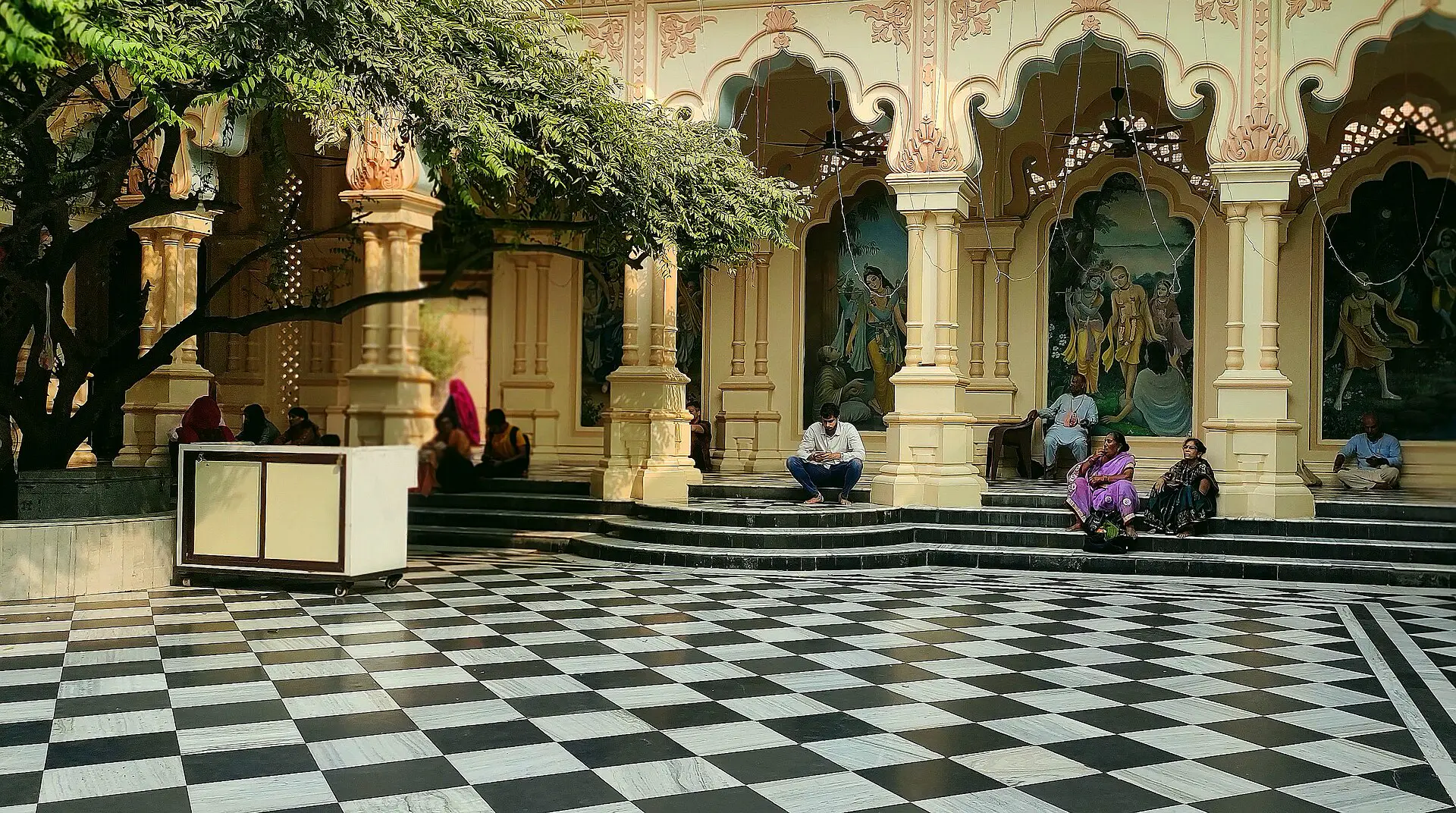
ISKCON Krishna Balaram Mandir
The Sri Sri Krishna Balaram Mandir at Raman Reti, known for its orderly darshan, kirtan and international devotee community.
Why it is specialOpened in 1975 by A. C. Bhaktivedanta Swami Prabhupada, the founder of ISKCON, whose samadhi stands beside it. Raman Reti is where, according to tradition, Krishna and Balarama played as boys in the soft sand.
Raman RetiEasy walkingCalmer and more structured than the old-town temples. Good for families and first-time visitors.
- Temple 45 minutes to 1 hour
Radha Raman Temple
One of the old Goswami temples, associated with a deity said to have manifested from a shaligram stone.
Why it is specialEstablished by Gopal Bhatta Goswami in the sixteenth century, the deity is believed to have manifested from his shaligram stone. It is one of the few original Goswami deities that has been worshipped continuously in Vrindavan without ever being moved.
Near Nidhivan, old townModerate walkingQuieter than Banke Bihari, with a traditional temple atmosphere.
- Heritage 45 minutes
Madan Mohan Temple
An old red sandstone temple on a raised site near the Yamuna, one of Vrindavan's early historic temples.
Why it is specialAssociated with Sanatana Goswami, a close follower of Chaitanya Mahaprabhu, it is regarded as among the oldest temples of the Goswami era. The original deity was later moved to Karauli in Rajasthan, and a replica is worshipped here.
Near Kali Daha, old townModerate walkingThere are steps to climb. It pairs well with a visit to Kesi Ghat.
- Heritage 1 hour
Rangji Mandir
A large temple in the Dravidian style, unusual in Braj, dedicated to Ranganatha.
Why it is specialBuilt in the nineteenth century in the South Indian style, with a tall gopuram, it follows the Sri Vaishnava tradition of Ramanuja. It is famous for its annual Brahmotsavam, when the deity is taken out in a large wooden chariot.
Near Mathura-Vrindavan roadModerate walkingEntry rules for non-Hindus, photography and certain areas may apply. Confirm locally.
- Spiritual 30 to 45 minutes
Nidhivan
A walled sacred grove associated with the Raas of Radha and Krishna, shaped by local belief and legend.
Why it is specialDevotees believe Radha and Krishna still perform the Raas here every night, so the grove is closed after dusk and no one stays inside. It is also where Swami Haridas is said to have revealed the Banke Bihari deity, and his samadhi is here.
Old VrindavanEasy walkingEntry is typically limited to daytime. Monkeys are common, so keep belongings secure.
- Ghat 1 hour
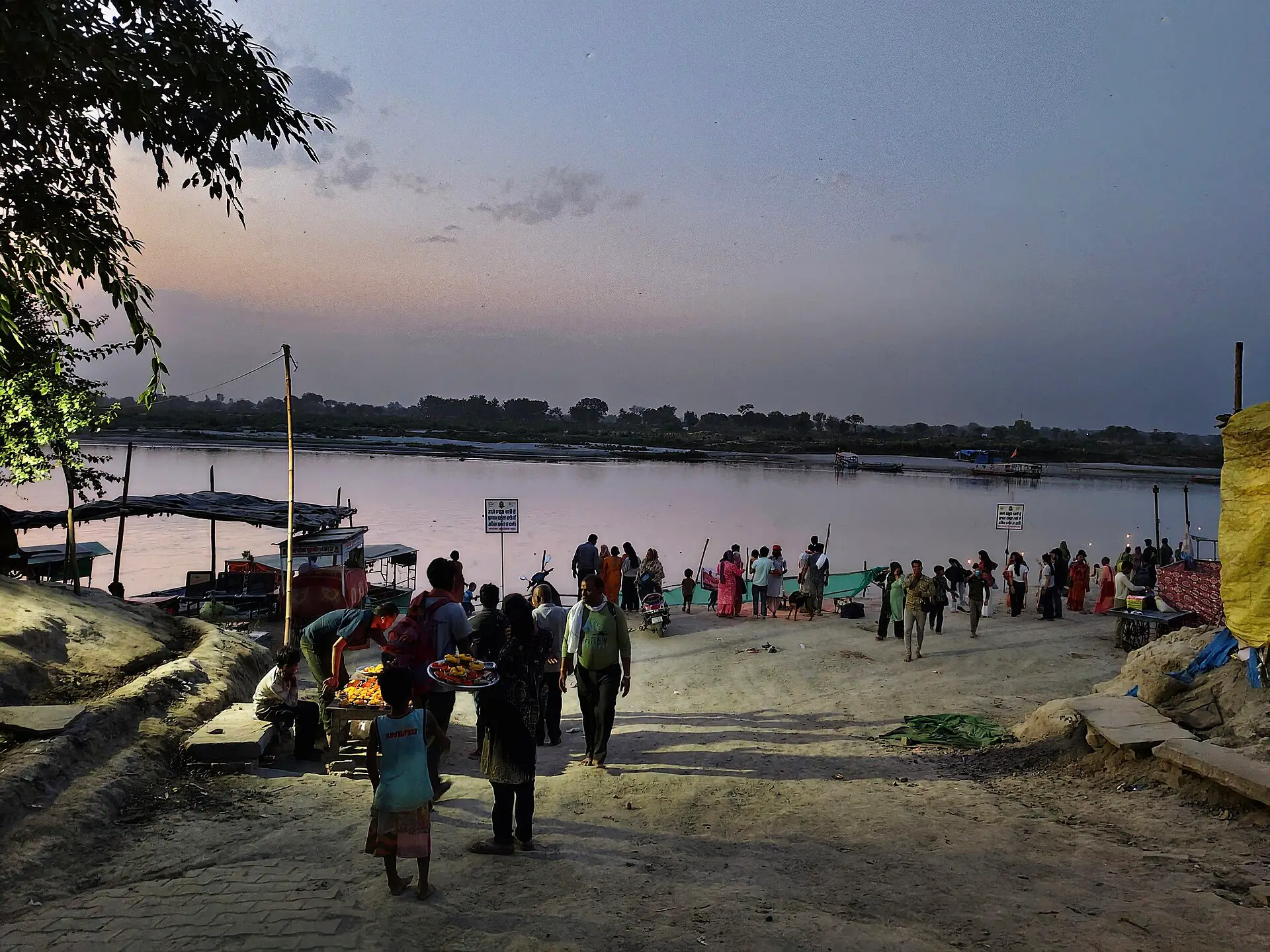
Kesi Ghat and Yamuna Riverfront
Vrindavan's main ghat on the Yamuna, with steps, boats and an evening aarti.
Why it is specialAccording to tradition, Krishna slew the horse demon Keshi near this spot and then bathed here. The ghat's sandstone pavilions, reflected in the Yamuna, are among the most recognisable views of Vrindavan.
Yamuna riverfrontModerate walkingBoat rides depend on water level. Steps can be slippery, and the area is also visited by monkeys.
- Spiritual 2.5 to 4 hours on foot, less by vehicle for sections
Vrindavan Parikrama Marg
A circular pilgrim path around the town, walked in devotion, often early morning or evening.
Why it is specialWalking around the town is a form of worship, and the path of roughly 10 km links many ghats, groves and temples. Many pilgrims walk it on Ekadashi and other auspicious days, some in dandavat, prostrating along the way.
Around VrindavanLots of walking / stepsThe full walk is long and not suitable for everyone. Many pilgrims cover part of it, or use an e-rickshaw.
- Market 1 to 1.5 hours
Loi Bazaar and Temple Lane Markets
Lively lanes for poshak, mala, books, prasad and devotional items near the old temples.
Why it is specialThese lanes supply much of the deity clothing, tulsi-bead kanthi malas and devotional books used in Krishna shrines across India. Buying a mala or poshak here is, for many pilgrims, part of the visit itself.
Old VrindavanModerate walkingBargain politely and keep valuables secure, as lanes are crowded.
- Heritage 45 minutes to 1 hour
Govind Dev Temple
A massive red sandstone temple from the Mughal era, one of the grandest pieces of temple architecture in north India.
Why it is specialBuilt in 1590 by Raja Man Singh of Amber under the guidance of the Goswamis, it is said to have once risen several storeys higher than today. Its vaulted interior blends Hindu and Mughal-era features, and the original deity is now worshipped in Jaipur.
Old town, near Brahma KundModerate walkingQuieter than the main temples and good for those interested in architecture. Some areas may be closed for conservation, so check locally.
- Spiritual 30 minutes
Seva Kunj
A walled garden grove in the old town with a small shrine, the Rang Mahal, at its centre.
Why it is specialTradition holds that here Krishna lovingly served Radha, decorating her feet and hair, which gives the grove its name. As at Nidhivan, devotees believe the divine couple come here at night, so it is closed after the evening.
Old Vrindavan, near Radha Damodar TempleEasy walkingOpen only in daylight hours. Monkeys are very active, so remove spectacles and secure phones and bags before entering.
- Temple 30 to 45 minutes
Radha Damodar Temple
A small, historic Goswami temple whose courtyard holds the samadhis of Rupa Goswami and Jiva Goswami.
Why it is specialEstablished in the sixteenth century by Jiva Goswami, it is a key site for Gaudiya Vaishnavas. A. C. Bhaktivedanta Swami Prabhupada lived and wrote here for several years before taking the Hare Krishna movement abroad in 1965.
Old Vrindavan, near Seva KunjModerate walkingPairs naturally with Seva Kunj. The lanes are narrow and crowded, so an e-rickshaw to the nearest drop point helps.
- Temple 30 to 45 minutes
Radha Vallabh Temple
The principal temple of the Radha Vallabh tradition, known for its devotional music and festival singing.
Why it is specialThe tradition was founded by Hit Harivansh Mahaprabhu in the sixteenth century. Radha is not shown as a separate image here; she is represented by a crown beside Krishna, a feature that sets this temple apart.
Old VrindavanModerate walkingCan be crowded during festivals and samaj gayan sessions. Darshan timings vary, so confirm locally.
- Heritage 30 minutes
Shahji Temple
A nineteenth-century marble temple best known for its unusual twisted, spiral marble columns.
Why it is specialBuilt in the 1870s by Shah Kundan Lal, a wealthy jeweller from Lucknow, it blends European and Indian decorative styles. Its Basanti Kamra, a hall with chandeliers and Belgian glass, is traditionally opened only on special days such as Basant Panchami.
Old Vrindavan, near NidhivanEasy walkingA short stop that fits easily between Nidhivan and Radha Raman. Photography rules can vary, so ask before taking pictures.
- Temple 30 minutes
Gopeshwar Mahadev Temple
An old Shiva temple in the heart of Vrindavan, unusual in a town devoted mainly to Krishna.
Why it is specialAccording to legend, Shiva longed to join Krishna's Raas, which only gopis could attend, so he took the form of a gopi. In remembrance, the Shiva lingam here is dressed and adorned like a gopi in the evening.
Old Vrindavan, near Vanshi VatEasy walkingBusiest on Mondays, during Shravan and on Maha Shivaratri. The evening shringar is the most distinctive time to visit, but expect crowds.
Hotels & accommodation
Where to stay in Vrindavan
SwagatGo helps you shortlist suitable stays for your dates, budget and group, share your requirements and we come back with options.
Hotels in Vrindavan
Vrindavan hotels range from simple to well-appointed, concentrated near Prem Mandir, ISKCON and the highway, with fewer near the old town. Tell us your needs and SwagatGo helps find suitable options on enquiry.
Hotels in Vrindavan Near Major Temples →Homestays in Vrindavan
Homestays and guest houses give a quieter, more personal stay, often with home-style vegetarian food. Facilities and house rules vary, so we help check suitability for your group.
Homestays and Guest Houses in Vrindavan →Dharamshalas in Vrindavan
Dharamshalas are trust- or ashram-run stays that suit simple, devotional trips. Expect basic rooms, house rules and sometimes advance-booking norms. We help enquire on your behalf, with no assurance of availability.
Dharamshalas in Vrindavan: What to Know Before You Go →Budget hotels in Vrindavan
Budget stays suit short visits. Check cleanliness, hot water, access for elders and distance from darshan.
Budget Hotels in Vrindavan for Devotees and Families →Best areas to stay
Near Banke Bihari Temple
Best for: Devotees who want walkable darshan and an old-town feel
Staying near Banke Bihari means short walks for early darshan, but narrow lanes, heavy crowds and limited vehicle access. Plan how you will handle luggage and elders.
Nearby: Banke Bihari Temple · Radha Raman Temple · Nidhivan · Loi Bazaar
Prem Mandir and Chhatikara Road
Best for: Families and groups wanting easier vehicle access
This side of town generally offers easier parking and wider roads, with Prem Mandir close. Banke Bihari is a short ride away, not a walk.
Nearby: Prem Mandir · Rangji Mandir
Prem Mandir and Chhatikara Road area guide →ISKCON and Raman Reti
Best for: Quiet stays, spiritual retreats and first-time visitors
Calmer than the old town, with an ashram feel and structured darshan nearby. Distances to old temples need a vehicle.
Nearby: ISKCON Krishna Balaram Mandir · Raman Reti
Parikrama Marg and ashram belt
Best for: Long-stay pilgrims, parikrama walkers and dharamshala seekers
Dharamshalas, ashrams and simple stays are common along the pilgrim paths, suited to people who value routine and community over comfort.
Nearby: Vrindavan Parikrama Marg · Kesi Ghat
Transport
Getting around Vrindavan
E-rickshaw
The standard way to move between temples, since many old-town lanes are closed to cars. Agree the fare first.
Private car
Useful for Mathura transfers, Prem Mandir and ISKCON, but cars cannot reach Banke Bihari's lanes, so expect a drop point and a short walk.
Walking
The temple lanes and parikrama are walkable, but crowded and uneven. Wear comfortable footwear.
Cycle rickshaw
A slower, quieter option for short distances in the old town.
Tour packages & itineraries
Suggested Vrindavan itineraries
Starting points we tailor around your dates, pace and interests. Every journey is customised; nothing here is a fixed package.
Vrindavan in one day
A paced day for Banke Bihari, the old temples, a quiet ghat visit and Prem Mandir in the evening.
- 1
Old town to Prem Mandir
- Early Banke Bihari darshan, planned for crowd and your group's energy
- Radha Raman Temple and Nidhivan
- Lunch and rest
- Madan Mohan Temple and Kesi Ghat
- Evening at Prem Mandir
Vrindavan unhurried
Day one covers the old town. Day two adds ISKCON, Rangji Mandir and a parikrama stretch at an easy pace.
- 1
Old-town temples
- Banke Bihari darshan
- Radha Raman Temple and Nidhivan
- Loi Bazaar for prasad and devotional items
- Evening aarti at Kesi Ghat
- 2
ISKCON, Rangji and Prem Mandir
- Morning at ISKCON Krishna Balaram Mandir
- Rangji Mandir
- Rest in the afternoon, or a short parikrama stretch by e-rickshaw
- Prem Mandir in the evening
Multi-city tours including Vrindavan
- 3 daysMathura Vrindavan Tour Package from Delhi: A Yamuna Expressway Road TripDelhi and NCR families, and visitors landing in Delhi, who want Krishna's Braj by road in two or three days.
- 4 daysBraj Krishna Circuit Tour: Mathura, Vrindavan, Govardhan, Barsana, Nandgaon and GokulDevotees who want the full Braj experience of Krishna's life stories rather than only the main Mathura and Vrindavan temples.
- 9 daysUttar Pradesh Pilgrimage Tour: Kashi, Prayag, Ayodhya, Mathura and VrindavanDevotees who want to cover Shiva, Ram and Krishna centres in one long, carefully paced journey.
Food & culture
Experiences in Vrindavan
1–3 hours depending on crowds
Banke Bihari Temple Darshan
The most visited temple in Vrindavan. Lanes are narrow and crowds can be very heavy. We help you pick timings and plan safe access, especially for seniors.
Best time: Weekday mornings; avoid festival weekends if travelling with seniors
Ask about this1–1.5 hours
Prem Mandir Evening Visit
The white marble temple is beautifully illuminated after dark, with landscaped gardens and depictions of Krishna leela.
Best time: Evening
Ask about this1–2 hours
ISKCON Krishna Balaram Mandir and Kirtan
Join the devotional kirtan at the ISKCON temple, popular with international visitors, and visit the samadhi of Srila Prabhupada.
Best time: Morning or evening aarti
Ask about thisVrindavan
2–4 hours
Vrindavan Parikrama Walk
The parikrama path around Vrindavan passes ghats on the Yamuna and many small shrines. Walk part of it or all of it at your pace.
Best time: Early morning
Ask about this
Local food
What to eat in Vrindavan
Vrindavan food is strictly vegetarian, and many places avoid onion and garlic. Simple, satvik meals suit the temple-town rhythm.
Satvik thali
A simple home-style meal of dal, sabzi, roti and rice, common at ashrams and small eateries.
Kachori and jalebi
A hearty breakfast served hot near the temple lanes.
Thandai
A chilled, spiced milk drink often had near Holi, though it is traditionally associated with festivals.
Peda and sweets
Milk sweets are served as prasad and sold across the market lanes.
Rabri and malai
Slow-reduced milk desserts, best on cooler evenings.
Chaat and tikki
Small snacks from busy stalls, sensible to eat from clean, popular outlets.
Plan your visit
Best time to visit and how to reach Vrindavan
Vrindavan is most comfortable between October and February. Festival periods are intense but spiritually rich, and need early planning.
Winter
October to February
Cool mornings and mild days, ideal for darshan and walking the parikrama. Fog can slow roads in December and January.
Festival season
Janmashtami (August or September), Holi (February or March)
Janmashtami and the Holi period bring enormous crowds. Holi in Braj runs over many days, with Vrindavan's celebrations at Banke Bihari on their own dates. Book early, expect restrictions, and avoid Banke Bihari at peak times with elders or small children.
Summer and monsoon
March to September
Summer is hot, so keep darshan to early morning and evening. The monsoon is humid, and can make lanes slippery, but crowds are lighter outside festivals.
How to reach Vrindavan
By air
There is no commercial airport in Vrindavan. The usual choices are Delhi Indira Gandhi International Airport, roughly 150 km away, or Agra airport, which has limited flights, about 70 km away. Check current flight availability for Agra before relying on it. Continue by taxi.
By rail
Mathura Junction, about 12 to 15 km away, is the major railhead with many trains. Vrindavan also has its own station with limited services. Most visitors arrive at Mathura Junction and take a car or auto.
By road
Vrindavan is reached through Mathura from the Delhi to Agra highway, or via the Yamuna Expressway, which has exits on the Mathura and Vrindavan side. Delhi is roughly 150 km away. Travel times vary with traffic, and festival days can be much slower.
FAQs
Vrindavan travel questions, answered
How many days do I need in Vrindavan?
One day covers the main temples. Two days allow a calmer pace with ISKCON, the older temples and a parikrama stretch.
Is Banke Bihari Temple suitable for senior citizens?
It can be difficult. Lanes are narrow, queues are dense and crowds surge. Go on a weekday morning with an attendant, or ask us to help plan an alternative approach. Seniors and small children need particular care.
Are there monkeys in Vrindavan?
Yes, they are common near temples and ghats. Keep spectacles, phones and bags secure, and avoid carrying loose food.
What is the difference between Vrindavan and Mathura?
Vrindavan is the temple town of Krishna's youth, known for Banke Bihari, Prem Mandir and ISKCON. Mathura, about 12 to 15 km away, is the birthplace, rail hub and ghat town.
Are temple timings fixed?
No. Timings change by season and festival, especially at Banke Bihari, so confirm shortly before you travel.
Can I stay at a dharamshala in Vrindavan?
Yes, many pilgrims do. They suit simple, devotional stays. Rules and booking norms vary, and we can help enquire on your behalf.
When is the best time to visit Vrindavan?
October to February is most comfortable. Janmashtami and Holi are special but extremely crowded.
Should I stay in Vrindavan or Mathura?
Stay in Vrindavan if your trip is temple-focused, and in Mathura if you arrive by rail or want the Janmabhoomi and ghats nearby. They are a short drive apart.
One journey · One trusted coordinator
Ready for Vrindavan? Let us plan it for you.
Share your dates and who is travelling. You get a free, personalised plan with hand-picked stays, your own driver and darshan timings. Nothing is booked until you are happy with the quotation.