
Uttar Pradesh · Ayodhya Dham · Saket · Awadh
Ayodhya Travel Planning and Hospitality Assistance
The sacred city of Shri Ram on the banks of the Saryu
Welcome to Ayodhya
Ayodhya, on the banks of the Saryu in eastern Uttar Pradesh, is revered as the birthplace of Shri Ram and one of the seven sacred cities of Hindu tradition. The Shri Ram Janmabhoomi Mandir, the old hilltop shrine of Hanuman Garhi, the palace-temple of Kanak Bhawan and the evening lamps at Ram Ki Paidi together make a pilgrimage that is quiet in spirit even when the crowds are large.
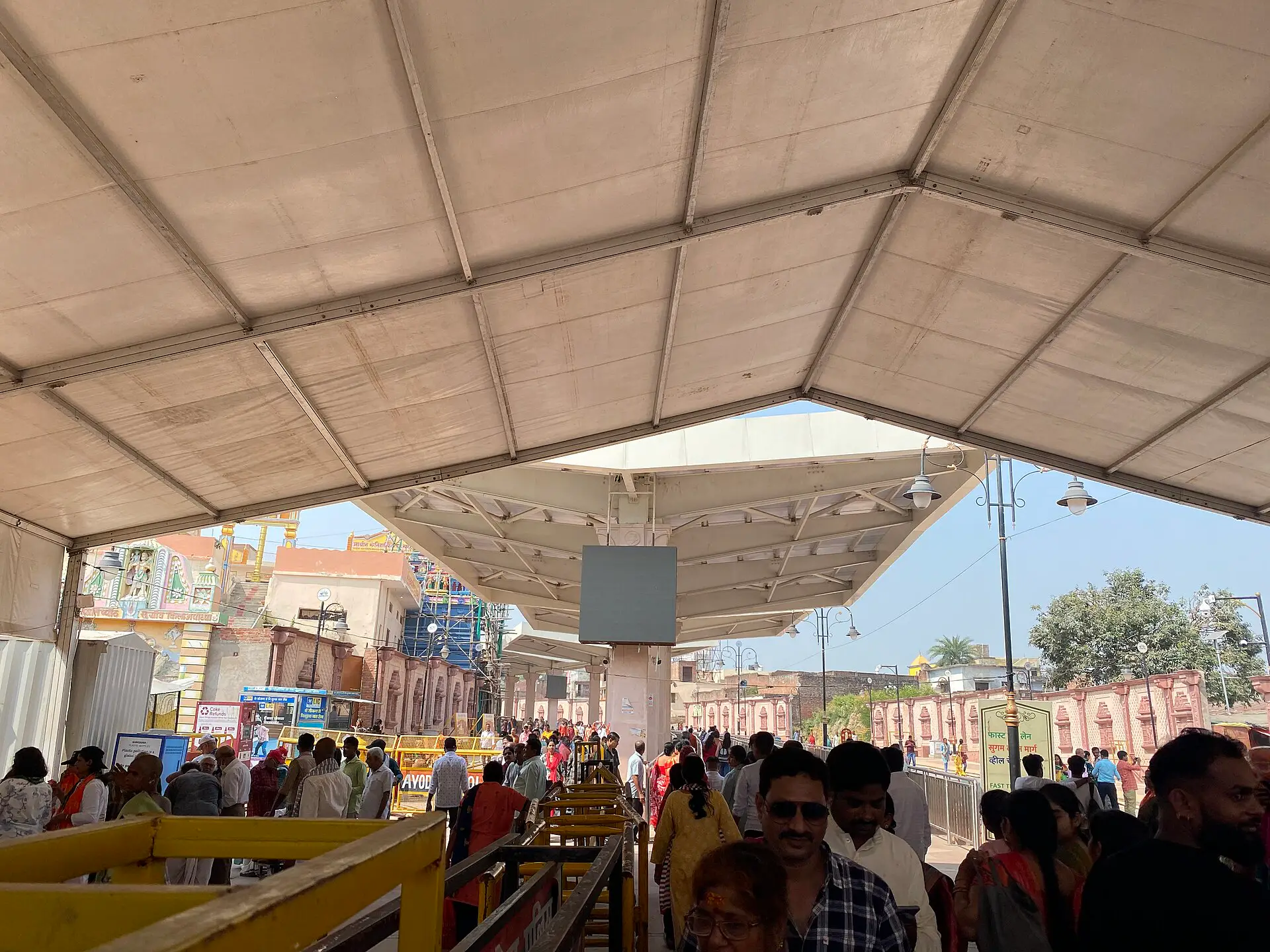
The city has changed quickly in recent years, with a new airport, a redeveloped railway station and wider roads leading towards the temple complex. For travellers, this means more choice but also more to coordinate: which area to stay in, which roads vehicles can use on the day, and how to pace darshan for elderly parents or children.
SwagatGo is a planning and enquiry service. Tell us your dates, group and preferences on WhatsApp, and we help you find suitable stays, transport and a realistic itinerary. We do not publish fixed prices or claim confirmed availability on this website.
Why visit
Why visit Ayodhya?
- 01
The birthplace of Shri Ram
For millions of devotees, Ayodhya is the origin of the Ramayana story. Walking its temples and ghats feels like moving through scripture.
- 02
A compact, walkable pilgrimage
Most major shrines lie within a few kilometres of each other, so a well-planned day can cover several of them without long drives.
- 03
Easy pairing with Varanasi and Prayagraj
Ayodhya sits comfortably on a Kashi–Prayag–Ayodhya circuit, which many families combine into a single spiritual journey.
- 04
Evenings by the Saryu
The river aarti and lamps at Ram Ki Paidi are gentler and less hurried than in larger pilgrim cities, and suit all ages.
Temples & attractions
Famous temples and places to visit in Ayodhya
- Temple 2–4 hours including queues and security
Shri Ram Janmabhoomi Mandir
The grand temple at the traditional birthplace of Shri Ram, now the focus of most pilgrim journeys to Ayodhya.
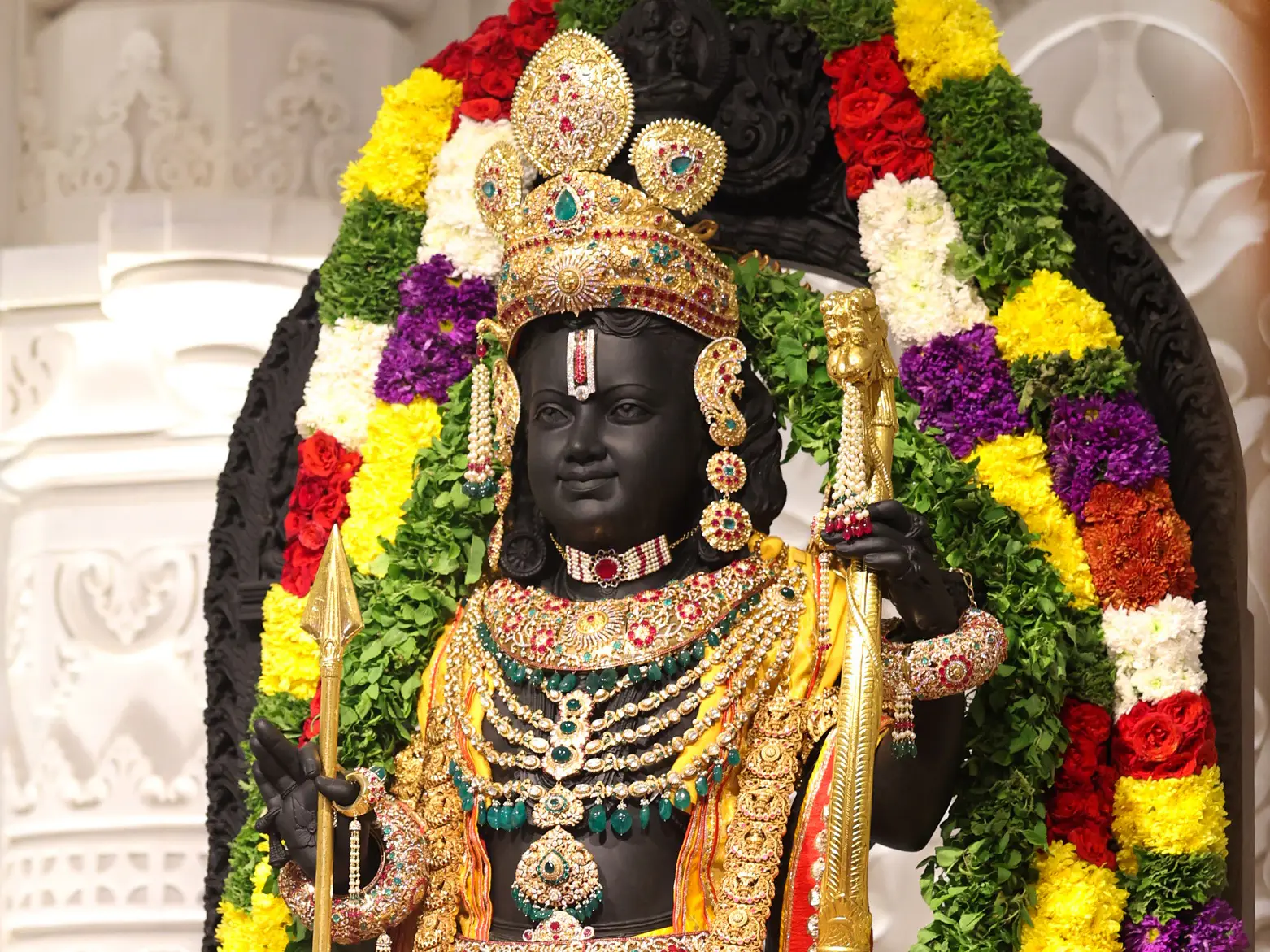
Why it is specialDevotees revere this site as Shri Ram's birthplace. The new temple, built in the Nagara style of north Indian temple architecture, was consecrated in January 2024 with the murti of Ram Lalla, the child form of Ram.
Ram JanmabhoomiModerate walkingEntry procedures, darshan timings, passes and items allowed inside are set by the temple trust and can change. Check the official Shri Ram Janmbhoomi Teerth Kshetra information before you travel.
- Temple 1 hour
Hanuman Garhi
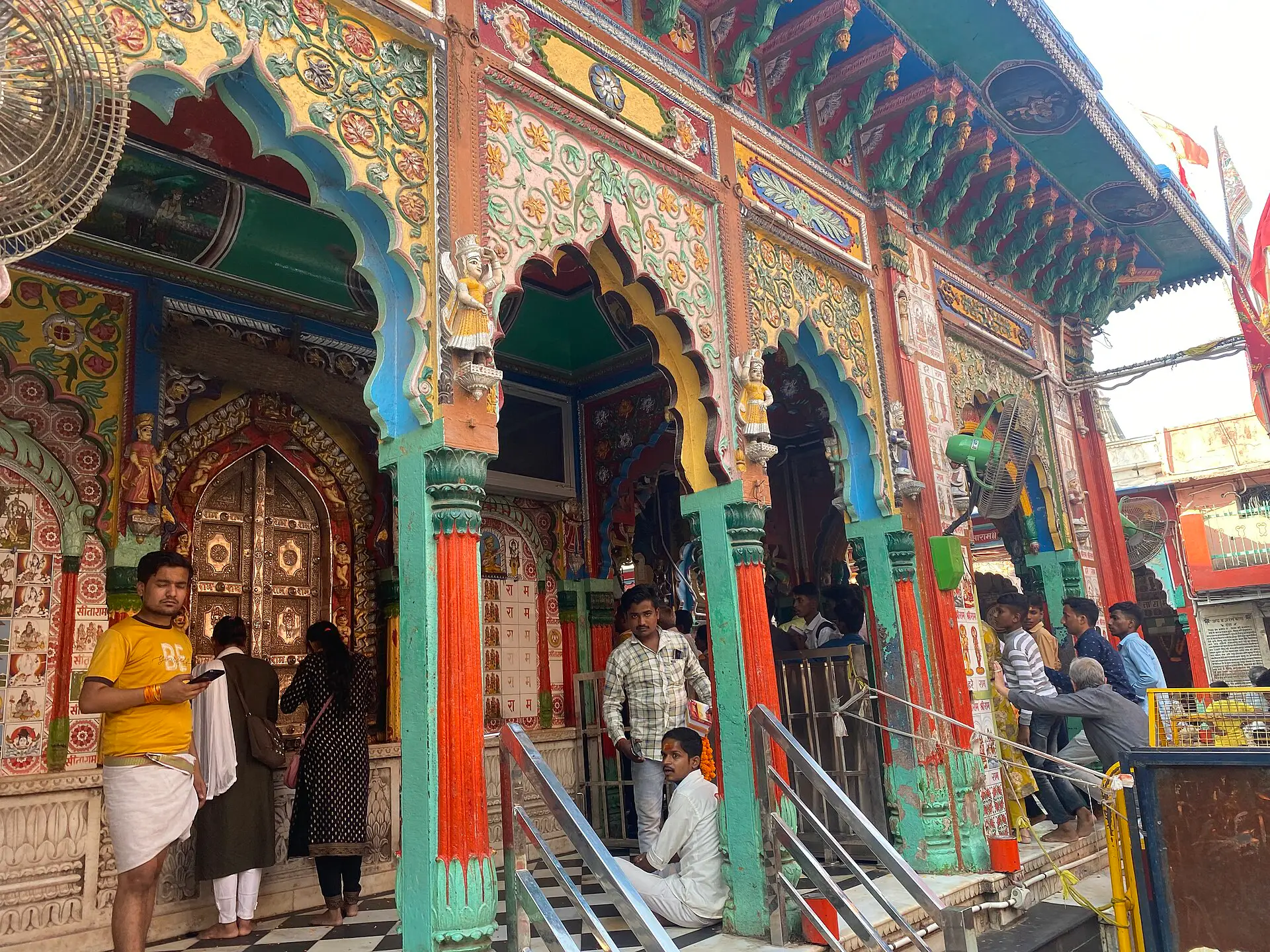
A fort-like hilltop temple of Hanuman, traditionally visited before Ram darshan, reached by a flight of steps.
Why it is specialAccording to tradition, Hanuman lived here to guard Ayodhya, which is why devotees seek his blessing before Ram darshan. The fortified temple seen today is generally linked to the 18th century, when it grew under Awadhi patronage.
Hanuman GarhiModerate walkingSteps lead up to the main shrine and the lanes get crowded, especially on Tuesdays and Saturdays. Elders should go at a quiet hour and take support.
- Temple 45 minutes to 1 hour
Kanak Bhawan
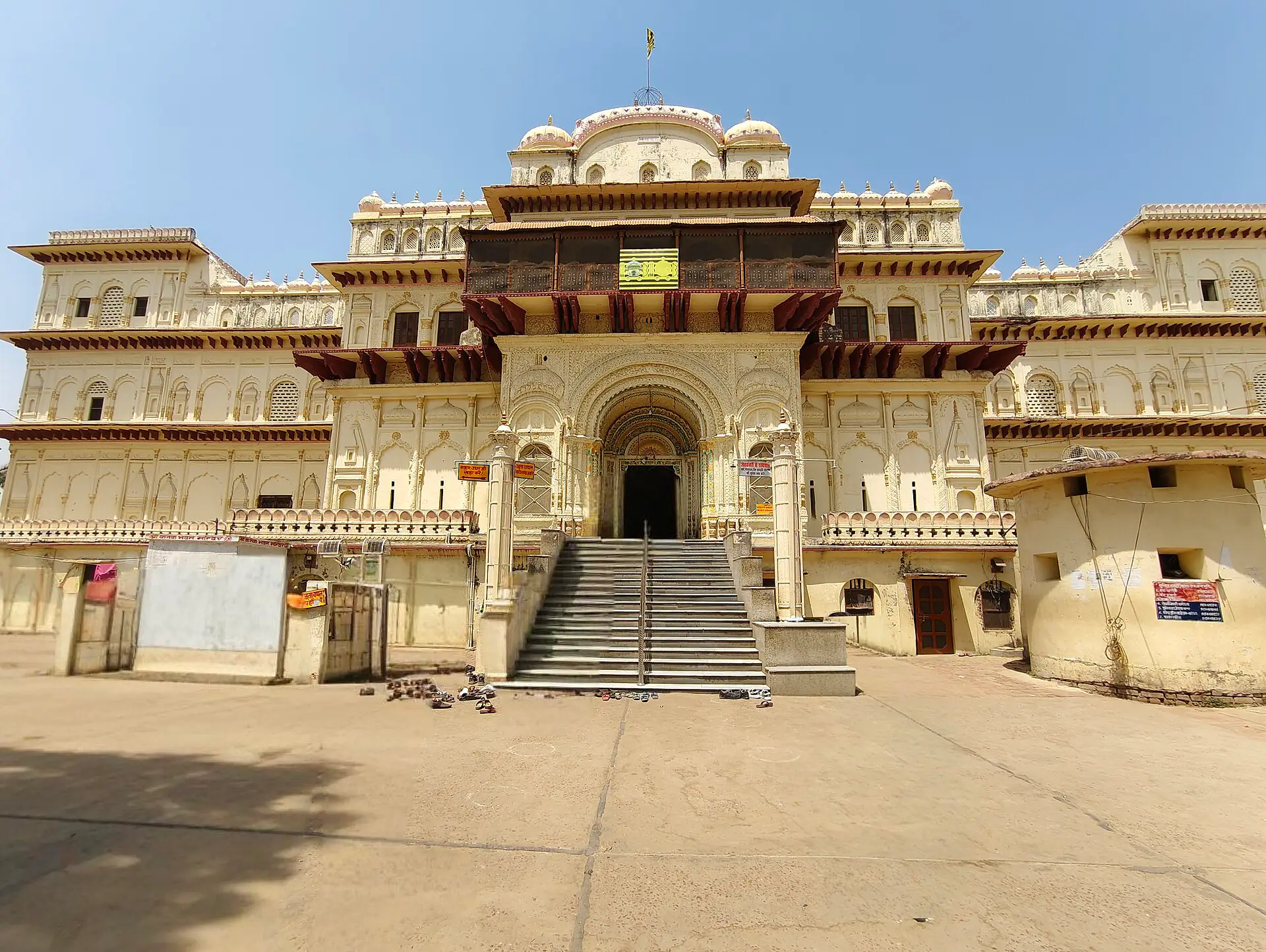
A beautifully decorated palace-temple associated with Sita and Ram, known for its ornate courtyard and idols.
Why it is specialTradition holds that Queen Kaikeyi gifted this palace to Sita after her marriage to Ram, making it their private home. The present building dates from the late 19th century, raised under the patronage of the royal family of Orchha-Tikamgarh.
Ram KotEasy walkingDarshan and aarti timings vary by season; confirm locally on the day.
- Heritage 30–45 minutes
Dashrath Mahal
Traditionally regarded as the palace of King Dashrath, today a temple complex with a peaceful, less crowded atmosphere.
Why it is specialDevotees remember this as the royal home where King Dashrath ruled and where Ram and his brothers spent their childhood. Today it is a living temple, with images of Ram, Sita, Lakshman and the family worshipped in a palace setting.
Ram KotEasy walking - Ghat 1–2 hours
Ram Ki Paidi
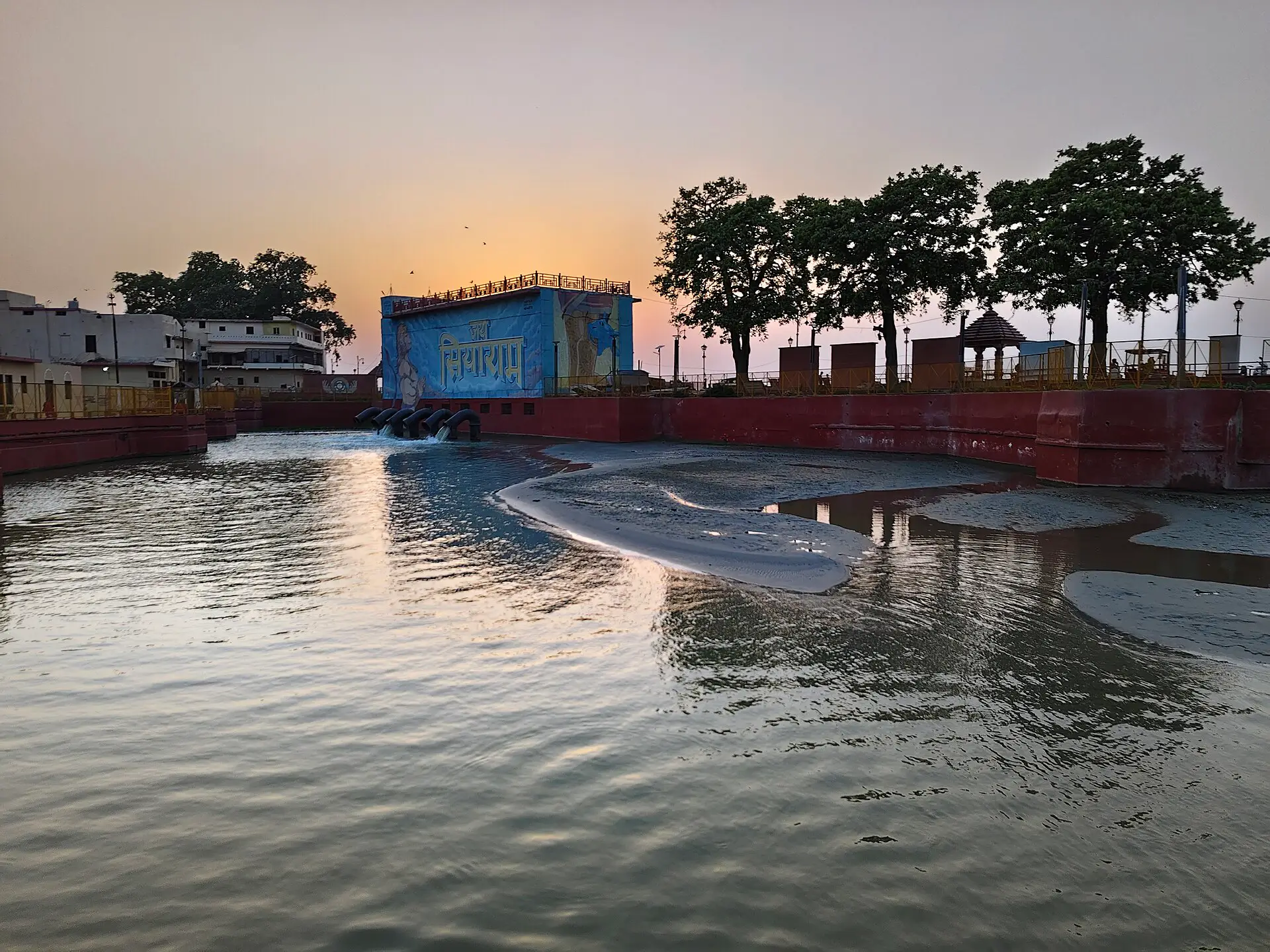
The landscaped series of ghats on the Saryu, where pilgrims bathe, pray and gather for evening aarti.
Why it is specialA bath in the Saryu is believed to wash away sins, and these steps give pilgrims easy access to the river. Ram Ki Paidi is also the main stage of Deepotsav, when lakhs of earthen lamps are lit along the banks around Diwali.
Saryu riverfrontEasy walkingEvenings are atmospheric; water levels and bathing arrangements change with the season, so follow local guidance.
- Ghat 1–1.5 hours
Guptar Ghat
A calm riverside spot on the Saryu associated in tradition with Shri Ram's final departure, with small temples and shaded banks.
Why it is specialAccording to tradition, this is where Shri Ram entered the waters of the Saryu at the end of his reign and returned to his divine abode. Its name is often linked to this 'hidden' or secret departure.
Outskirts of FaizabadEasy walkingIt lies roughly 10 km from the main temple area, so it suits a vehicle-supported visit.
- Temple 30–45 minutes
Nageshwarnath Temple
A Shiva temple regarded in local tradition as among Ayodhya's oldest, close to the Saryu.
Why it is specialLocal tradition says Kush, son of Ram, founded this temple for a Naga princess devoted to Shiva, who had returned an armlet he lost in the Saryu. It is a major focus of worship on Mahashivratri.
Near Ram Ki PaidiEasy walking - Spiritual 30 minutes
Treta Ke Thakur
A temple on the Saryu bank linked to the memory of the Ashwamedha yagna of Shri Ram, with a quiet riverside setting.
Why it is specialTradition holds that Shri Ram performed the Ashwamedha yagna at this spot. The name recalls the Treta Yuga, the age of the Ramayana, and the temple's images of Ram and his brothers are held in special regard by devotees.
Kaleram Mandir area, Saryu bankEasy walking - Heritage 45 minutes
Bahu Begum Ka Maqbara
An 18th-century Awadhi mausoleum in Faizabad, recalling the city's nawabi past beyond its Ramayana heritage.
Why it is specialThis is the tomb of Bahu Begum, wife of Nawab Shuja-ud-Daula, who lived in Faizabad when it was a capital of Awadh. It is regarded as one of the finest examples of Awadhi architecture outside Lucknow.
FaizabadEasy walkingA good option for travellers interested in history who have an extra half-day.
- Spiritual 20–30 minutes
Sita Ki Rasoi
A small shrine near the Ram Janmabhoomi area, revered as the kitchen of Sita, with symbolic cooking utensils on display.
Why it is specialDevotees believe Sita cooked here after coming to Ayodhya as a bride, and the shrine honours her as Annapurna, the giver of food. It is one of the few places in Ayodhya centred on Sita's household life.
Ram Janmabhoomi areaEasy walkingAccess can be affected by security arrangements around the temple complex. Ask locally or at your stay whether it is open to visitors on your date.
- Temple 20–30 minutes
Choti Devkali Temple
A modest temple of the goddess in the old town, quieter than the main shrines and visited mainly by local devotees.
Why it is specialAccording to tradition, Sita brought the image of her family goddess, Gauri, from Janakpur when she married Ram, and it was installed here. Devotees regard her as Ayodhya's protective goddess.
Old Ayodhya, towards the SaryuEasy walkingIt sits in narrow lanes, so an e-rickshaw is the easiest way to reach it. It pairs well with a morning at the ghats.
- Heritage 45 minutes to 1 hour
Mani Parvat
A tall earthen mound on the southern side of the old town, topped by a small temple and offering wide views over Ayodhya.
Why it is specialOne tradition says Hanuman let fall a piece of the Sanjeevani mountain here while carrying it to Lanka. Historians have also linked the mound to early Buddhist remains, giving it a layered past few visitors know about.
Southern AyodhyaModerate walkingThe climb is short but uneven in places. Go in the morning or late afternoon, and skip it in heavy rain.
- Heritage 45 minutes to 1 hour
Suraj Kund
A large stepped tank with a temple to the Sun god, set in open surroundings a few kilometres from the main temple area.
Why it is specialThe tank honours Surya, the Sun god, from whom Ram's Suryavanshi (solar) dynasty traces its descent. It links Ayodhya's sacred story to the royal line of Ikshvaku and is a calm contrast to the busy temple lanes.
Outskirts of Ayodhya, a short drive from the townEasy walkingA vehicle is the practical way to get here. Early morning or late afternoon light is best; facilities on site are limited.
- Heritage 45 minutes to 1 hour
Gulab Bari
An 18th-century tomb set in a walled garden of roses and water channels in Faizabad, a short drive from Ayodhya.
Why it is specialGulab Bari, the 'rose garden', is the resting place of Nawab Shuja-ud-Daula of Awadh and his family. With Bahu Begum Ka Maqbara, it recalls the era when Faizabad was the capital of Awadh.
FaizabadEasy walkingIt is a protected monument, so opening hours and any entry fee are set by the authorities. Combine it with Bahu Begum Ka Maqbara for a heritage half-day.
- Museum 1 hour
Tulsi Smarak Bhawan
A memorial hall and cultural centre dedicated to Goswami Tulsidas, with a library, exhibits and Ramlila performances.
Why it is specialTradition holds that Tulsidas began writing the Ramcharitmanas in Ayodhya, and this centre honours him. It is home to the Ayodhya Shodh Sansthan, a research institute on Ramayana culture, and hosts regular Ramlila staging.
Old AyodhyaEasy walkingRamlila timings and exhibit opening hours can change; ask locally or at your stay before planning an evening around a performance.
Hotels & accommodation
Where to stay in Ayodhya
SwagatGo helps you shortlist suitable stays for your dates, budget and group, share your requirements and we come back with options.
Hotels in Ayodhya
Hotels in and around Ayodhya range from simple business-style properties to more comfortable newer ones. Check distance to the temple complex, lifts, parking and vegetarian food. SwagatGo helps match options on enquiry.
Hotels in Ayodhya for Pilgrims and Families →Budget hotels in Ayodhya
Budget stays suit short pilgrim trips where the room is mainly for rest. Check cleanliness, hot water, location and whether the lane is accessible by vehicle.
Budget Hotels in Ayodhya: What to Expect and Check →Homestays in Ayodhya
Homestays offer a quieter, family-style stay with home-cooked vegetarian food in some cases. Availability is limited and varies, so enquire early.
Homestays in Ayodhya: Staying With Local Families →Dharamshalas in Ayodhya
Dharamshalas are traditional pilgrim guest houses, often trust-run, with basic rooms and a spiritual setting. Booking rules, check-in processes and facilities differ between them.
Dharamshalas in Ayodhya: Traditional Pilgrim Stays →Best areas to stay
Near Ram Mandir and Ram Janmabhoomi path
Best for: Short pilgrimages, senior citizens, early-morning darshan
Stays here save the most travel time on darshan day, but vehicles are restricted close to the complex, so a stay can still involve a short walk or e-rickshaw ride. Demand is highest here and options are limited.
Nearby: Shri Ram Janmabhoomi Mandir · Hanuman Garhi · Kanak Bhawan
Hanuman Garhi and Ram Kot
Best for: Travellers wanting a traditional temple-town atmosphere
Narrow lanes, old dharamshalas and many small shrines. Good for those who want to be close to several temples, though access by car can be tight.
Nearby: Hanuman Garhi · Kanak Bhawan · Dashrath Mahal
Ram Ki Paidi and Saryu riverfront
Best for: Evening aarti, photography, relaxed stays
A more open, quieter setting with river views in places. A reasonable choice for families who value evenings by the water.
Nearby: Ram Ki Paidi · Nageshwarnath Temple · Ram Katha Park
Railway station area
Best for: Late-night or early-morning train arrivals, one-night stops
Practical for rail travellers and has a good range of straightforward stays. The temples are a short drive away rather than a walk.
Nearby: Ayodhya Dham Junction
Faizabad and the highway belt
Best for: Groups with cars, easier parking, larger rooms
Further out, with more space and easier road access, and better when you are travelling by your own vehicle or in a larger group.
Nearby: Bahu Begum Ka Maqbara · Guptar Ghat
Transport
Getting around Ayodhya
E-rickshaw
The most practical way to move inside the temple zone and between nearby shrines, where larger vehicles are limited.
Auto-rickshaw
Useful for short trips between the station, ghats and temples. Agree the fare before starting.
Private taxi
Best for families, elders and trips to Guptar Ghat, Faizabad or nearby towns. Drivers will drop you at the nearest permitted point.
Walking
Hanuman Garhi, Kanak Bhawan and Dashrath Mahal are close enough to cover on foot in a few hours, though footwear is usually left outside temples.
Outstation cab
Convenient for Lucknow, Varanasi, Prayagraj or Gorakhpur transfers and for combining Ayodhya with other cities.
Tour packages & itineraries
Suggested Ayodhya itineraries
Starting points we tailor around your dates, pace and interests. Every journey is customised; nothing here is a fixed package.
Ayodhya in One Day
A focused darshan day covering the main shrines and an evening at the Saryu.
- 1
Darshan and Saryu
- Early start for Shri Ram Janmabhoomi Mandir darshan, following the current official entry guidance
- Hanuman Garhi darshan
- Lunch and rest
- Kanak Bhawan and Dashrath Mahal
- Evening aarti and a walk at Ram Ki Paidi
Ayodhya at an Easier Pace
Two days that separate the major darshan from the other temples and the riverfront.
- 1
Main darshan
- Morning darshan at Shri Ram Janmabhoomi Mandir
- Hanuman Garhi in the afternoon, after a rest
- Evening at Ram Ki Paidi
- 2
Temples and heritage
- Kanak Bhawan and Dashrath Mahal
- Nageshwarnath Temple and Treta Ke Thakur
- Ram Katha Park or Bahu Begum Ka Maqbara
- Local sweets and shopping before departure
Ayodhya with Surroundings
A relaxed three-day plan that includes Guptar Ghat and a day to rest or travel on.
- 1
Arrival and Saryu
- Check in and rest
- Ram Ki Paidi and evening aarti
- 2
Ram Mandir and Hanuman Garhi
- Early Ram Mandir darshan
- Hanuman Garhi and Kanak Bhawan
- Free evening for shopping and prasad
- 3
Quiet Ayodhya
- Guptar Ghat by vehicle
- Dashrath Mahal and Nageshwarnath Temple
- Onward journey to Varanasi or Lucknow if planned
Multi-city tours including Ayodhya
- 4 daysVaranasi Ayodhya Tour Package: A Four-Day Kashi and Ram Nagari JourneyFamilies and first-time pilgrims who want two of the most sought-after darshans in one unhurried trip.
- 6 daysVaranasi Prayagraj Ayodhya Tour Package: The Kashi, Prayag and Ayodhya CircuitDevotees who want the classic eastern Uttar Pradesh circuit without rushing any of the three cities.
- 6 daysRam Van Gaman Yatra: Ayodhya, Prayagraj and Chitrakoot in Lord Ram's FootstepsDevotees of Lord Ram and those who wish to follow the story of the exile through its traditional places.
- 9 daysUttar Pradesh Pilgrimage Tour: Kashi, Prayag, Ayodhya, Mathura and VrindavanDevotees who want to cover Shiva, Ram and Krishna centres in one long, carefully paced journey.
- 5 daysSenior Citizen Pilgrimage Tour: Varanasi and Ayodhya at a Gentle PaceParents and grandparents who wish to do the yatra with dignity, rest and minimal walking.
- 7 daysNRI Pilgrimage Tour in India: Kashi, Prayag and Ayodhya, Planned from AbroadNRI families and overseas visitors who need a smooth, well-organised yatra with limited time in India.
- 5 daysVaranasi Ayodhya Tour from Delhi: Plan the Journey from the CapitalDelhi and NCR families who want to start from home and return there without wasting leave.
Food & culture
Experiences in Ayodhya
2–4 hours depending on crowds
Shri Ram Janmabhoomi Mandir Darshan Assistance
Plan your darshan around the temple's entry procedures, security rules and queue times, with transport to and from the complex.
Best time: Early morning on weekdays is usually calmer
Ask about thisAbout 1 hour
Saryu Aarti at Ram Ki Paidi
Evening prayers on the banks of the Saryu, with lamps floating on the water along the ghats of Ram Ki Paidi.
Best time: Around sunset
Ask about thisHalf day to full day
Ayodhya Temple Circuit
A planned route covering Hanuman Garhi, Kanak Bhawan, Dashrath Mahal and other important shrines, paced for your group.
Best time: Morning
Ask about this
Local food
What to eat in Ayodhya
Ayodhya is a largely vegetarian pilgrim city, and the temple area is known for sweets, simple thalis and street snacks. Many eateries serve pure vegetarian food without onion and garlic on request.
Kachori-sabzi
A common breakfast of crisp kachoris with spiced potato curry, often eaten before darshan.
Poori-sabzi with jalebi
A hearty morning plate found at many local shops near the temple lanes.
Peda and temple sweets
Ayodhya is known for milk-based sweets such as pedas, often bought as prasad or gifts.
Satvik thali
A simple vegetarian meal with dal, seasonal sabzi, roti and rice, often prepared without onion and garlic.
Litti-chokha
An eastern UP and Bihar favourite of roasted wheat balls with mashed vegetables, widely available.
Chaat and tikki
Evening street snacks in the market areas, best chosen from busy, clean stalls.
Plan your visit
Best time to visit and how to reach Ayodhya
October to March is the most comfortable period for sightseeing, though festival dates draw the largest crowds and need earlier planning.
Winter
November to February
Pleasant days and cool mornings. Warm clothing is useful early and at night. Deepotsav around Diwali falls in this period and is very busy.
Summer
March to June
Hot, especially May and June. Ram Navami falls in spring and brings very heavy crowds. Plan darshan early in the day.
Monsoon
July to September
Greener and less crowded, with some rain and a higher Saryu. Carry rain gear and allow extra time for travel.
How to reach Ayodhya
By air
Maharishi Valmiki International Airport is the city's own airport, roughly 10 km from the town centre. Check the airline schedule for current routes. Lucknow's airport, about 130 km away, is the larger alternative for broader connections.
By train
Ayodhya Dham Junction is the main station, connected to Lucknow, Delhi, Varanasi, Gorakhpur and other cities by several trains. Check the current IRCTC schedule before planning arrival times.
By road
Ayodhya is well linked by national and state highways. Lucknow is roughly 3 hours away, Varanasi about 5 hours and Prayagraj around 3.5 to 4 hours, depending on traffic.
FAQs
Ayodhya travel questions, answered
How many days are enough for Ayodhya?
One full day covers the main shrines, but two days is more comfortable, especially with children or elders. Add a third day if you want Guptar Ghat, heritage sites or a relaxed pace.
Do I need a pass or booking for Ram Mandir darshan?
Entry rules, passes and darshan slots are decided by the temple trust and can change. Please check the official Shri Ram Janmbhoomi Teerth Kshetra information before you travel. SwagatGo can help you plan the day around those rules.
Can I carry my mobile phone or bags inside the temple complex?
Security rules on phones, bags and other items are strict and are updated from time to time. Check the official guidance before your visit and plan on leaving valuables at your stay.
Which is the best time to visit Ayodhya?
October to March is the most pleasant season. Ram Navami and Deepotsav around Diwali are spiritually special but very crowded, so book stays and transport well in advance.
Is Ayodhya suitable for senior citizens?
Yes, with planning. Choose a stay close to the temple area, go at quieter hours, use e-rickshaws or a private taxi for transfers and avoid packing too many temples in one day.
Can SwagatGo book my hotel directly on this website?
No. SwagatGo is an enquiry-based planning service. Share your dates and needs on WhatsApp, and we help you find suitable stay and transport options.
Is Ayodhya vegetarian?
The temple area is predominantly vegetarian, and most eateries near the main shrines serve vegetarian food. If you have specific dietary needs, mention them in your enquiry.
One journey · One trusted coordinator
Ready for Ayodhya? Let us plan it for you.
Share your dates and who is travelling. You get a free, personalised plan with hand-picked stays, your own driver and darshan timings. Nothing is booked until you are happy with the quotation.