
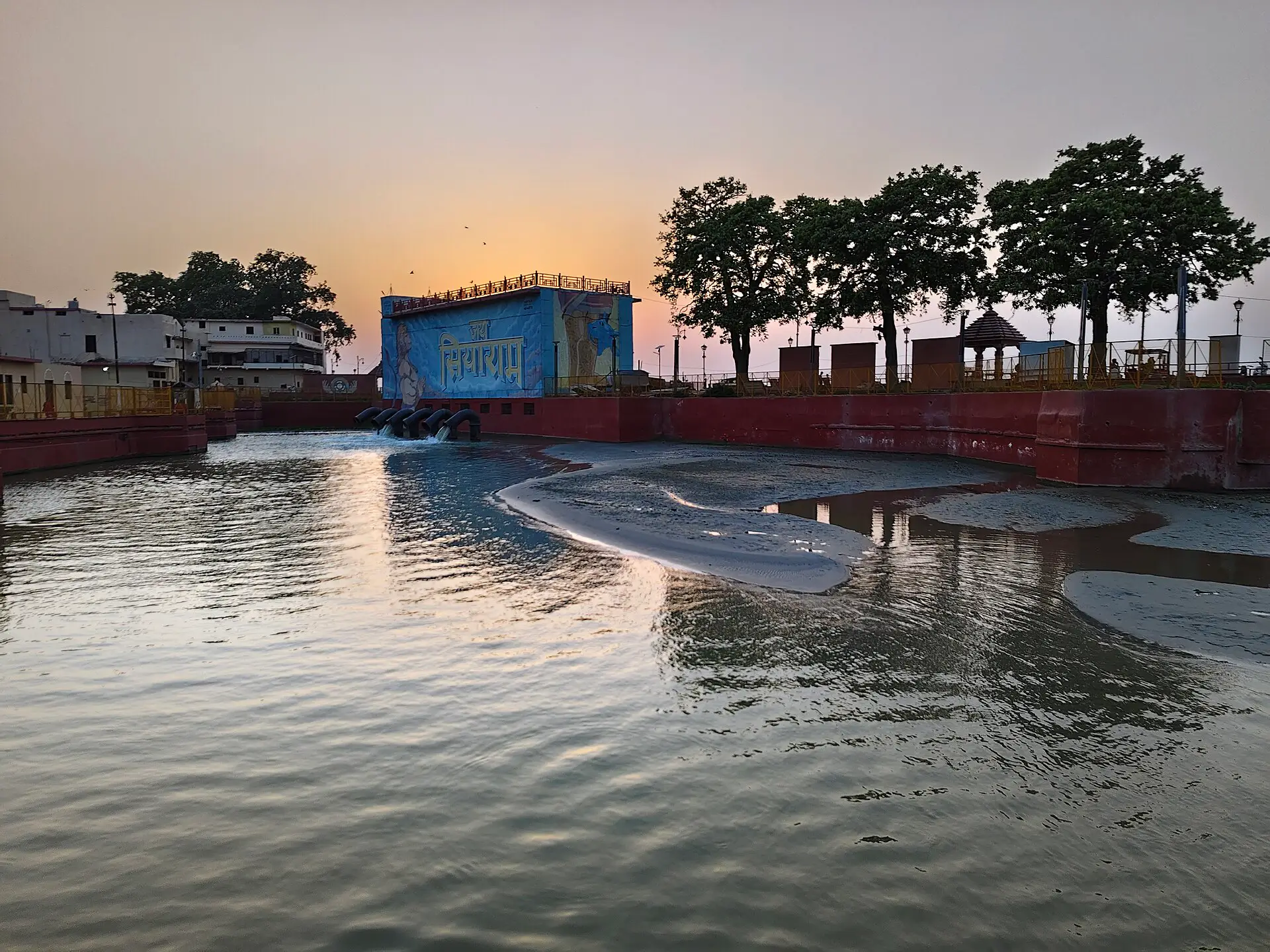
AreaOutskirts of Ayodhya, a short drive from the town
Time needed45 minutes to 1 hour
WalkingEasy
Why it is specialThe tank honours Surya, the Sun god, from whom Ram's Suryavanshi (solar) dynasty traces its descent. It links Ayodhya's sacred story to the royal line of Ikshvaku and is a calm contrast to the busy temple lanes.
A vehicle is the practical way to get here. Early morning or late afternoon light is best; facilities on site are limited.
About Suraj Kund
A large stepped tank with a temple to the Sun god, set in open surroundings a few kilometres from the main temple area.
The tank honours Surya, the Sun god, from whom Ram's Suryavanshi (solar) dynasty traces its descent. It links Ayodhya's sacred story to the royal line of Ikshvaku and is a calm contrast to the busy temple lanes.
Planning your visit
A vehicle is the practical way to get here. Early morning or late afternoon light is best; facilities on site are limited.
- Where: Outskirts of Ayodhya, a short drive from the town, Ayodhya
- Time to allow: 45 minutes to 1 hour
- Walking: Walking is light here, so it usually suits senior citizens and families with small children.
Where to stay near Suraj Kund
Near Ram Mandir and Ram Janmabhoomi path is a practical base for this visit. Best for: short pilgrimages, senior citizens, early-morning darshan.
Stays here save the most travel time on darshan day, but vehicles are restricted close to the complex, so a stay can still involve a short walk or e-rickshaw ride. Demand is highest here and options are limited.
Combine Suraj Kund with
- Shri Ram Janmabhoomi Mandir: The grand temple at the traditional birthplace of Shri Ram, now the focus of most pilgrim journeys to Ayodhya.
- Hanuman Garhi: A fort-like hilltop temple of Hanuman, traditionally visited before Ram darshan, reached by a flight of steps.
- Kanak Bhawan: A beautifully decorated palace-temple associated with Sita and Ram, known for its ornate courtyard and idols.
- Dashrath Mahal: Traditionally regarded as the palace of King Dashrath, today a temple complex with a peaceful, less crowded atmosphere.
Nearby places worth adding
- Temple 2–4 hours including queues and security
Shri Ram Janmabhoomi Mandir
The grand temple at the traditional birthplace of Shri Ram, now the focus of most pilgrim journeys to Ayodhya.
Why it is specialDevotees revere this site as Shri Ram's birthplace. The new temple, built in the Nagara style of north Indian temple architecture, was consecrated in January 2024 with the murti of Ram Lalla, the child form of Ram.
Ram JanmabhoomiModerate walkingEntry procedures, darshan timings, passes and items allowed inside are set by the temple trust and can change. Check the official Shri Ram Janmbhoomi Teerth Kshetra information before you travel.
- Temple 1 hour
Hanuman Garhi
A fort-like hilltop temple of Hanuman, traditionally visited before Ram darshan, reached by a flight of steps.
Why it is specialAccording to tradition, Hanuman lived here to guard Ayodhya, which is why devotees seek his blessing before Ram darshan. The fortified temple seen today is generally linked to the 18th century, when it grew under Awadhi patronage.
Hanuman GarhiModerate walkingSteps lead up to the main shrine and the lanes get crowded, especially on Tuesdays and Saturdays. Elders should go at a quiet hour and take support.
- Temple 45 minutes to 1 hour
Kanak Bhawan
A beautifully decorated palace-temple associated with Sita and Ram, known for its ornate courtyard and idols.
Why it is specialTradition holds that Queen Kaikeyi gifted this palace to Sita after her marriage to Ram, making it their private home. The present building dates from the late 19th century, raised under the patronage of the royal family of Orchha-Tikamgarh.
Ram KotEasy walkingDarshan and aarti timings vary by season; confirm locally on the day.
- Heritage 30–45 minutes
Dashrath Mahal
Traditionally regarded as the palace of King Dashrath, today a temple complex with a peaceful, less crowded atmosphere.
Why it is specialDevotees remember this as the royal home where King Dashrath ruled and where Ram and his brothers spent their childhood. Today it is a living temple, with images of Ram, Sita, Lakshman and the family worshipped in a palace setting.
Ram KotEasy walking
Frequently asked questions
Where is Suraj Kund?
Suraj Kund is in Outskirts of Ayodhya, a short drive from the town, Ayodhya, Uttar Pradesh. We can include it in a Ayodhya sightseeing day with a private car and driver.
Why is Suraj Kund important?
The tank honours Surya, the Sun god, from whom Ram's Suryavanshi (solar) dynasty traces its descent. It links Ayodhya's sacred story to the royal line of Ikshvaku and is a calm contrast to the busy temple lanes.
How much time do I need at Suraj Kund?
Allow 45 minutes to 1 hour. Festival days, weekends and holidays can take longer because of crowds.
Is Suraj Kund suitable for senior citizens?
Walking is light here, so it usually suits senior citizens and families with small children.