
This page focuses on the temple circuit itself: which shrines are worth your time, in what order to visit them, and how to pace the day so it remains a pilgrimage and not a race.
The principal temples
- Shri Ram Janmabhoomi Mandir, the centre of most visits
- Hanuman Garhi, the hilltop shrine traditionally visited first
- Kanak Bhawan, the ornate palace-temple of Sita and Ram
- Dashrath Mahal, associated with King Dashrath
- Nageshwarnath, a Shiva temple near the Saryu
A sensible order
Many devotees begin with Hanuman Garhi and then proceed to Ram Mandir, following the tradition of seeking Hanuman's blessing first. In practice, queue conditions on the day may decide the order, so keep your plan flexible.
Etiquette and practicalities
- Dress modestly, with shoulders and knees covered
- Footwear is left outside; carry socks for hot or cold floors
- Carry minimal valuables, as storage near temples is limited
- Expect crowds on Tuesdays, Saturdays and festival days
- Timings vary by season; confirm locally
How much to fit into a day
Four or five shrines are a comfortable limit for most families in a single day. Add a rest after lunch, particularly in summer, and keep the Saryu aarti for the evening.
Ayodhya at a glance
- Temple 2–4 hours including queues and security
Shri Ram Janmabhoomi Mandir
The grand temple at the traditional birthplace of Shri Ram, now the focus of most pilgrim journeys to Ayodhya.
Why it is specialDevotees revere this site as Shri Ram's birthplace. The new temple, built in the Nagara style of north Indian temple architecture, was consecrated in January 2024 with the murti of Ram Lalla, the child form of Ram.
Ram JanmabhoomiModerate walkingEntry procedures, darshan timings, passes and items allowed inside are set by the temple trust and can change. Check the official Shri Ram Janmbhoomi Teerth Kshetra information before you travel.
- Temple 1 hour
Hanuman Garhi
A fort-like hilltop temple of Hanuman, traditionally visited before Ram darshan, reached by a flight of steps.
Why it is specialAccording to tradition, Hanuman lived here to guard Ayodhya, which is why devotees seek his blessing before Ram darshan. The fortified temple seen today is generally linked to the 18th century, when it grew under Awadhi patronage.
Hanuman GarhiModerate walkingSteps lead up to the main shrine and the lanes get crowded, especially on Tuesdays and Saturdays. Elders should go at a quiet hour and take support.
- Temple 45 minutes to 1 hour
Kanak Bhawan
A beautifully decorated palace-temple associated with Sita and Ram, known for its ornate courtyard and idols.
Why it is specialTradition holds that Queen Kaikeyi gifted this palace to Sita after her marriage to Ram, making it their private home. The present building dates from the late 19th century, raised under the patronage of the royal family of Orchha-Tikamgarh.
Ram KotEasy walkingDarshan and aarti timings vary by season; confirm locally on the day.
- Heritage 30–45 minutes
Dashrath Mahal
Traditionally regarded as the palace of King Dashrath, today a temple complex with a peaceful, less crowded atmosphere.
Why it is specialDevotees remember this as the royal home where King Dashrath ruled and where Ram and his brothers spent their childhood. Today it is a living temple, with images of Ram, Sita, Lakshman and the family worshipped in a palace setting.
Ram KotEasy walking - Ghat 1–2 hours
Ram Ki Paidi
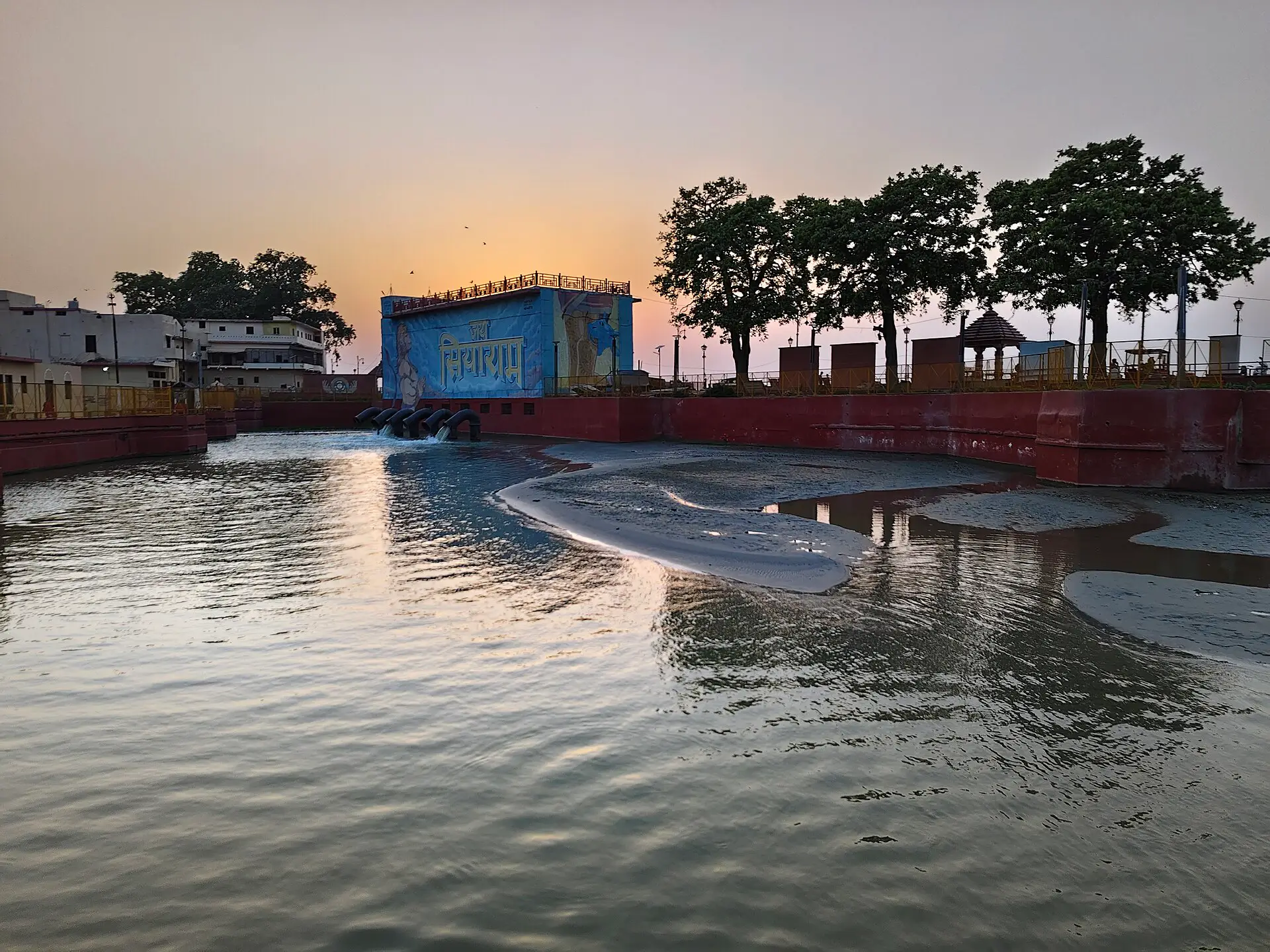
The landscaped series of ghats on the Saryu, where pilgrims bathe, pray and gather for evening aarti.
Why it is specialA bath in the Saryu is believed to wash away sins, and these steps give pilgrims easy access to the river. Ram Ki Paidi is also the main stage of Deepotsav, when lakhs of earthen lamps are lit along the banks around Diwali.
Saryu riverfrontEasy walkingEvenings are atmospheric; water levels and bathing arrangements change with the season, so follow local guidance.
- Ghat 1–1.5 hours
Guptar Ghat
A calm riverside spot on the Saryu associated in tradition with Shri Ram's final departure, with small temples and shaded banks.
Why it is specialAccording to tradition, this is where Shri Ram entered the waters of the Saryu at the end of his reign and returned to his divine abode. Its name is often linked to this 'hidden' or secret departure.
Outskirts of FaizabadEasy walkingIt lies roughly 10 km from the main temple area, so it suits a vehicle-supported visit.
- Temple 30–45 minutes
Nageshwarnath Temple
A Shiva temple regarded in local tradition as among Ayodhya's oldest, close to the Saryu.
Why it is specialLocal tradition says Kush, son of Ram, founded this temple for a Naga princess devoted to Shiva, who had returned an armlet he lost in the Saryu. It is a major focus of worship on Mahashivratri.
Near Ram Ki PaidiEasy walking - Spiritual 30 minutes
Treta Ke Thakur
A temple on the Saryu bank linked to the memory of the Ashwamedha yagna of Shri Ram, with a quiet riverside setting.
Why it is specialTradition holds that Shri Ram performed the Ashwamedha yagna at this spot. The name recalls the Treta Yuga, the age of the Ramayana, and the temple's images of Ram and his brothers are held in special regard by devotees.
Kaleram Mandir area, Saryu bankEasy walking - Heritage 45 minutes
Bahu Begum Ka Maqbara
An 18th-century Awadhi mausoleum in Faizabad, recalling the city's nawabi past beyond its Ramayana heritage.
Why it is specialThis is the tomb of Bahu Begum, wife of Nawab Shuja-ud-Daula, who lived in Faizabad when it was a capital of Awadh. It is regarded as one of the finest examples of Awadhi architecture outside Lucknow.
FaizabadEasy walkingA good option for travellers interested in history who have an extra half-day.
- Spiritual 20–30 minutes
Sita Ki Rasoi
A small shrine near the Ram Janmabhoomi area, revered as the kitchen of Sita, with symbolic cooking utensils on display.
Why it is specialDevotees believe Sita cooked here after coming to Ayodhya as a bride, and the shrine honours her as Annapurna, the giver of food. It is one of the few places in Ayodhya centred on Sita's household life.
Ram Janmabhoomi areaEasy walkingAccess can be affected by security arrangements around the temple complex. Ask locally or at your stay whether it is open to visitors on your date.
- Temple 20–30 minutes
Choti Devkali Temple
A modest temple of the goddess in the old town, quieter than the main shrines and visited mainly by local devotees.
Why it is specialAccording to tradition, Sita brought the image of her family goddess, Gauri, from Janakpur when she married Ram, and it was installed here. Devotees regard her as Ayodhya's protective goddess.
Old Ayodhya, towards the SaryuEasy walkingIt sits in narrow lanes, so an e-rickshaw is the easiest way to reach it. It pairs well with a morning at the ghats.
- Heritage 45 minutes to 1 hour
Mani Parvat
A tall earthen mound on the southern side of the old town, topped by a small temple and offering wide views over Ayodhya.
Why it is specialOne tradition says Hanuman let fall a piece of the Sanjeevani mountain here while carrying it to Lanka. Historians have also linked the mound to early Buddhist remains, giving it a layered past few visitors know about.
Southern AyodhyaModerate walkingThe climb is short but uneven in places. Go in the morning or late afternoon, and skip it in heavy rain.
- Heritage 45 minutes to 1 hour
Suraj Kund
A large stepped tank with a temple to the Sun god, set in open surroundings a few kilometres from the main temple area.
Why it is specialThe tank honours Surya, the Sun god, from whom Ram's Suryavanshi (solar) dynasty traces its descent. It links Ayodhya's sacred story to the royal line of Ikshvaku and is a calm contrast to the busy temple lanes.
Outskirts of Ayodhya, a short drive from the townEasy walkingA vehicle is the practical way to get here. Early morning or late afternoon light is best; facilities on site are limited.
- Heritage 45 minutes to 1 hour
Gulab Bari
An 18th-century tomb set in a walled garden of roses and water channels in Faizabad, a short drive from Ayodhya.
Why it is specialGulab Bari, the 'rose garden', is the resting place of Nawab Shuja-ud-Daula of Awadh and his family. With Bahu Begum Ka Maqbara, it recalls the era when Faizabad was the capital of Awadh.
FaizabadEasy walkingIt is a protected monument, so opening hours and any entry fee are set by the authorities. Combine it with Bahu Begum Ka Maqbara for a heritage half-day.
- Museum 1 hour
Tulsi Smarak Bhawan
A memorial hall and cultural centre dedicated to Goswami Tulsidas, with a library, exhibits and Ramlila performances.
Why it is specialTradition holds that Tulsidas began writing the Ramcharitmanas in Ayodhya, and this centre honours him. It is home to the Ayodhya Shodh Sansthan, a research institute on Ramayana culture, and hosts regular Ramlila staging.
Old AyodhyaEasy walkingRamlila timings and exhibit opening hours can change; ask locally or at your stay before planning an evening around a performance.
Frequently asked questions
How many temples can I cover in one day?
Most travellers comfortably cover Ram Mandir, Hanuman Garhi, Kanak Bhawan and one or two others. More than that tends to feel rushed.
Should I visit Hanuman Garhi before Ram Mandir?
It is a common tradition, but not a rule. Choose the order based on queues and convenience.
Can SwagatGo arrange a guide for the temple circuit?
We can arrange a local guide or driver on enquiry, depending on your travel plan.