
Smaller shrines and kunds dot the hills and the riverside too. This page helps you decide what to include given your time and walking comfort.
Maa Vindhyavasini
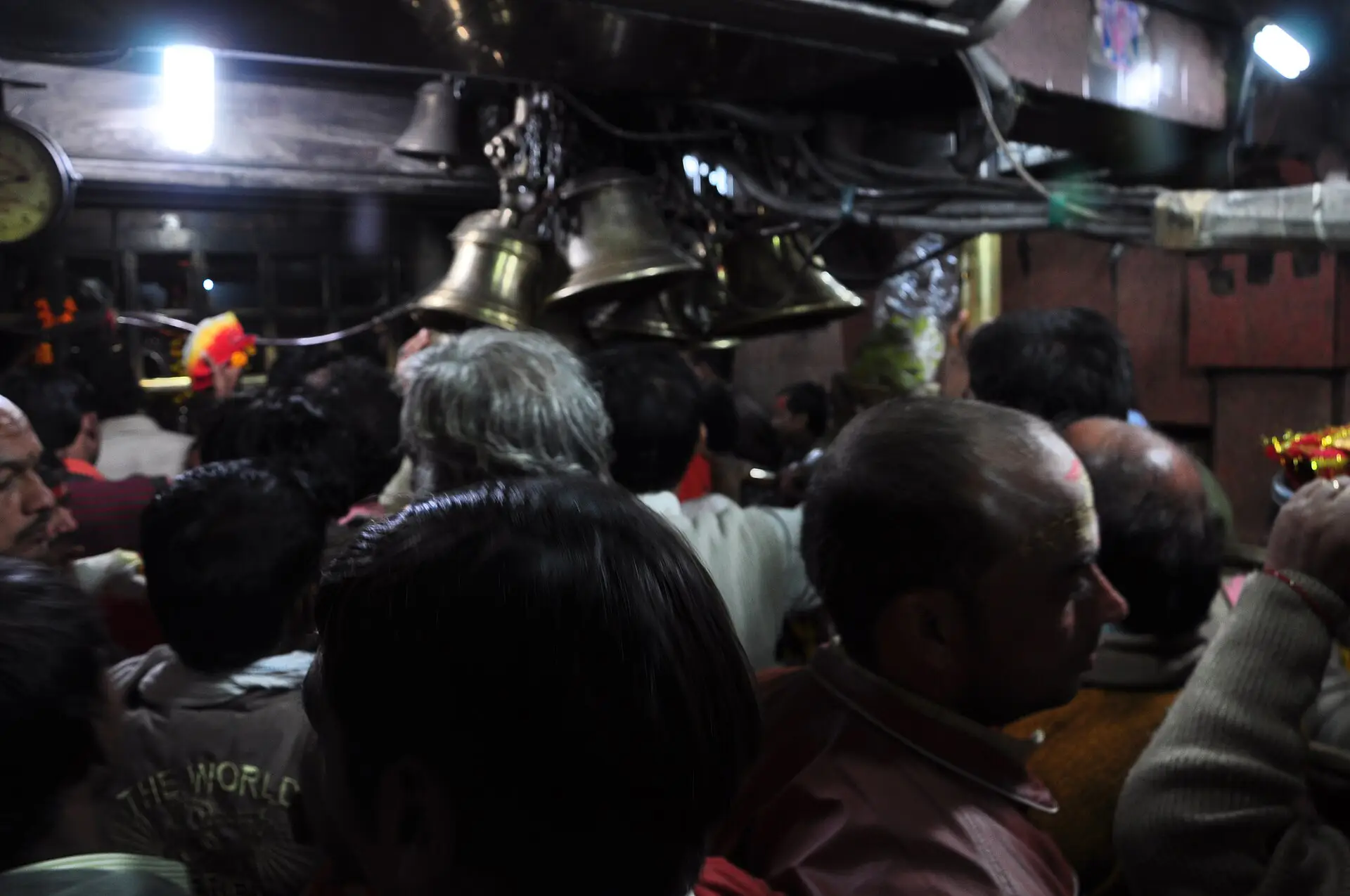
The main temple and the reason most people come. Darshan is through a queue that can be quick on a quiet weekday morning and very long on festival days. Expect a crowded, devotional atmosphere and plan for standing time.
Maa Ashtabhuja
The eight-armed Devi on the Vindhya hill. Reaching the shrine involves a climb of many steps, and a ropeway has operated in recent years. Views over the surrounding countryside reward those who make it up.
Maa Kali Khoh
A Kali temple set into the hill, with a cave-like inner shrine. There are fewer steps than at Ashtabhuja, but the area can be uneven and monkeys are active.
Smaller stops
- Sita Kund, a spring in the hills linked with Sita in tradition.
- Shrines along the Ganga ghats close to the main temple.
- Small Bhairav and Hanuman shrines along the parikrama road.
Vindhyachal at a glance
- Temple 1 to 3 hours, depending on the queue
Maa Vindhyavasini Temple
The principal shrine of the town, reached through busy lanes from the Ganga side, where most pilgrims begin their visit.
Why it is specialAccording to tradition, the Goddess here is Yogmaya, the infant Kamsa tried to kill in the Krishna story, who then made the Vindhya hills her home. Devotees regard Vindhyachal as a siddhapeeth where the Goddess is present in her complete form.
Vindhyachal town centreModerate walkingQueues vary a great deal by day and season, and are longest on Navratri, Tuesdays, Sundays and holidays. Footwear is left outside. Confirm current darshan and aarti arrangements locally, as the corridor work has changed access in recent years.
- Temple 1.5 to 2 hours including the climb
Maa Ashtabhuja Temple
A hill shrine of the eight-armed Devi, the second point of the Trikon, reached by a flight of steps or, when running, a ropeway.
Why it is specialThe eight-armed Devi is worshipped here as a form of Mahasaraswati, completing the triad with Vindhyavasini as Mahalakshmi and Kali Khoh as Mahakali. Devotees believe the Trikon darshan is complete only once all three have been visited.
Vindhya hills, a few kilometres from the main templeLots of walking / stepsThe steps are tiring for seniors and in the heat. A ropeway has operated in recent years; check on the day whether it is running and what the queue looks like.
- Temple 45 minutes to 1.5 hours
Maa Kali Khoh Temple
A temple of Maa Kali set into the hillside, the third point of the Trikon, known for its cave-like sanctum.
Why it is specialThe image of Maa Kali here is traditionally described as facing upward with an open mouth, an unusual form that devotees link with her drinking the blood of the demon Raktabija. It represents Mahakali in the Trikon.
Vindhya hills, on the parikrama roadModerate walkingThere are some steps and uneven stretches near the shrine, and monkeys are common. Keep bags closed and do not carry open food.
- Spiritual Half a day by vehicle; a full day on foot
Trikon Parikrama
The sacred triangle connecting Maa Vindhyavasini, Maa Ashtabhuja and Maa Kali Khoh, usually completed by vehicle with darshan at each shrine.
Why it is specialThe triangle of three goddesses, representing Mahalakshmi, Mahasaraswati and Mahakali, is what sets Vindhyachal apart from other Devi shrines. Devotees believe that completing the circuit, ideally on the same day, brings the fullest blessing of the Goddess.
Vindhyachal town and the Vindhya hillsModerate walkingSome devotees walk the whole circuit, which is a long, hot walk with a hill section. Most families use a car, auto or e-rickshaw between shrines.
- Ghat 45 minutes to 1.5 hours
Ganga Ghats of Vindhyachal
Bathing ghats on the Ganga close to the temple, including Ram Gaya Ghat, where pilgrims take a dip or sit quietly by the river.
Why it is specialVindhyachal is one of the few major Devi shrines set right on the Ganga, so a dip before darshan is part of the pilgrimage. Ram Gaya Ghat is traditionally linked with Rama performing shraddh rites for his father here.
Riverside, VindhyachalModerate walkingGhat steps can be steep and slippery, and the current is strong in the monsoon. Bathe only at busy, marked spots and keep seniors close to the railing.
- Spiritual 30 to 45 minutes
Sita Kund
A small spring and shrine in the hills that tradition links with Sita, often added to the Trikon route.
Why it is specialAccording to local tradition, Lakshmana shot an arrow into the rock to bring out water when Sita was thirsty, and the spring has been revered ever since. Many devotees sprinkle or sip the water before continuing the parikrama.
Vindhya hills, near the parikrama roadModerate walkingInvolves steps. Ask your driver whether it suits your group's walking comfort before adding it.
- Market 1.5 to 2 hours
Mirzapur Town and Riverfront
The district town a short drive downstream, with old riverside ghats, busy markets and a long tradition of carpet and brassware trade.
Why it is specialMirzapur grew as one of the major river-trade towns of the Ganga plain, and it is still known for hand-knotted carpets and durries, and for brass and bell-metal ware. Its old ghats and carved stone facades reflect that prosperity.
Mirzapur cityEasy walkingTraffic in the old market is slow. Go in the late afternoon and keep the visit short with seniors.
- Heritage 2 to 3 hours including the drive
Chunar Fort
A historic sandstone fort on a rock above the Ganga, roughly 30 to 40 km from Vindhyachal, with wide river views.
Why it is specialBecause it commanded the Ganga route, the fort changed hands many times, passing through Sher Shah Suri, the Mughals and later the British. Legend links it with King Bhartrihari, and Chunar sandstone was used for the polished Mauryan pillars.
Chunar, Mirzapur districtModerate walkingParts of the fort involve slopes, uneven ground and steps. Opening arrangements can change, so check locally before you drive out.
- Nature Half a day for one or two falls
Wyndham, Lakhaniya Dari and Tanda Falls
Seasonal waterfalls in the hills of Mirzapur district that come alive in the monsoon and are often dry by early summer.
Why it is specialThese falls show a different side of the district, where the Vindhya plateau breaks into rocky escarpments. Wyndham Falls is said to be named after a British-era district officer, and the area has long been a local monsoon picnic spot.
Mirzapur district, outside the townLots of walking / stepsRocks are slippery and water levels rise suddenly after rain. Do not enter the water, and avoid these spots with small children or unsteady walkers.
- Temple 30–45 minutes
Rameshwar Mahadev Temple, Shivpur
An old Shiva temple in the village of Shivpur near the Ganga, a few kilometres from the main Vindhyavasini temple.
Why it is specialAccording to tradition, Rama installed the Shivalinga here after performing shraddh for his father at the ghat locally known as Ram Gaya Ghat. Many pilgrims add it to the wider circuit around the Trikon for that reason.
Shivpur, a short drive from VindhyachalEasy walkingAsk your driver to combine it with the ghats. The approach lanes are narrow, and Mondays and the month of Shravan are busier.
- Ghat 45 minutes–1 hour
Pakka Ghat, Mirzapur
The best known of Mirzapur's old ghats, with broad stone steps and riverside buildings decorated with carved stonework.
Why it is specialIts carved balconies, brackets and pillars, worked in local sandstone, are among the finest examples of the stone craft the Mirzapur and Chunar area is known for, and recall the wealth of the town's river-trade era.
Mirzapur city riverfrontModerate walkingBest in the early morning or late afternoon light. Steps can be slippery near the water, and the river runs strong in the monsoon.
- Heritage 15–30 minutes
Ghanta Ghar (Clock Tower), Mirzapur
A colonial-era clock tower in the heart of Mirzapur's old market, built of local stone and covered in fine carving.
Why it is specialDating from the late nineteenth century, it is admired for the detail of its sandstone carving and is the best-known landmark of the town's old commercial centre, a reminder of Mirzapur's importance in the trade of that period.
Old market, Mirzapur cityEasy walkingIt stands in busy market traffic, so view it from the roadside and combine it with Pakka Ghat and the bazaar.
- Spiritual 30–45 minutes
Kantit Sharif Dargah
The dargah of the Sufi saint Hazrat Khwaja Ismail Chishti, visited by people of many faiths.
Why it is specialLinked with the Chishti Sufi tradition, the shrine is one of the best-known dargahs in eastern Uttar Pradesh. Its annual urs draws large gatherings with qawwali, and Hindu and Muslim devotees alike come to offer prayers.
Kantit, near Mirzapur cityEasy walkingCover your head, dress modestly and remove footwear where asked. Crowds are heavy during the urs, whose dates follow the Islamic calendar.
- Nature 1.5–2 hours plus the drive
Siddhnath ki Dari
A waterfall and rock pool in a wooded gorge in the hills of the Chunar area, with a small shrine nearby.
Why it is specialThe name recalls a siddha, an accomplished ascetic, said to have meditated here, so the spot combines natural beauty with a local sacred tradition. It is one of the most popular monsoon outings in the Chunar area.
Near Chunar, Mirzapur districtLots of walking / stepsThe falls flow best in and just after the monsoon and can be thin by summer. Rocks are slippery and water levels rise quickly after rain, so swimming is not advised. Not suitable for unsteady walkers.
- Spiritual 1 hour
Shri Paramhans Ashram, Sakteshgarh
A large, quiet ashram in the Vindhya foothills, associated with Swami Adgadanand.
Why it is specialSwami Adgadanand, who has lived and taught here, is known for 'Yatharth Geeta', a widely read commentary on the Bhagavad Gita, and the ashram draws seekers from across India for its calm setting and simple routine.
Sakteshgarh, near ChunarEasy walkingKeep voices low and respect the ashram routine. Check locally whether visitors are being received on the day you plan to go.
Frequently asked questions
In what order should we visit the temples?
Most pilgrims start with Maa Vindhyavasini, then go to Maa Ashtabhuja and finish at Maa Kali Khoh. Local customs vary, so follow your family tradition if you have one.
How long does it take to see all three?
Half a day by vehicle on a normal day. Allow much longer during Navratri.
Is photography allowed inside?
Photography is usually restricted in the sanctum areas. Follow the signs and instructions of temple staff.