
AreaGovardhan parikrama route, between Govardhan and Radha Kund
Time needed45 minutes to 1 hour
WalkingModerate
Why it is specialThe memorial pavilions were built in the eighteenth century by the Jat rulers of Bharatpur in honour of Maharaja Suraj Mal. In Braj tradition, this is where Radha gathered flowers and met Krishna, and the name means flower lake.
Best in the early morning or late afternoon light. Steps down to the water are steep in places, and monkeys are common, so keep belongings secure.
About Kusum Sarovar
A large stepped tank on the Govardhan parikrama route, framed by graceful sandstone chhatris and pavilions.
The memorial pavilions were built in the eighteenth century by the Jat rulers of Bharatpur in honour of Maharaja Suraj Mal. In Braj tradition, this is where Radha gathered flowers and met Krishna, and the name means flower lake.
Planning your visit
Best in the early morning or late afternoon light. Steps down to the water are steep in places, and monkeys are common, so keep belongings secure.
- Where: Govardhan parikrama route, between Govardhan and Radha Kund, Mathura
- Time to allow: 45 minutes to 1 hour
- Walking: Expect a moderate amount of walking, some steps or uneven ground. Most seniors manage with breaks and good footwear.
Where to stay near Kusum Sarovar
Near Krishna Janmabhoomi and the old city is a practical base for this visit. Best for: devotees who want early darshan and to walk to temples and ghats.
Staying close to the Janmabhoomi and Dwarkadhish keeps darshan days short and gives easy access to Vishram Ghat. The lanes are crowded and parking is limited, so check vehicle access when you enquire.
Combine Kusum Sarovar with
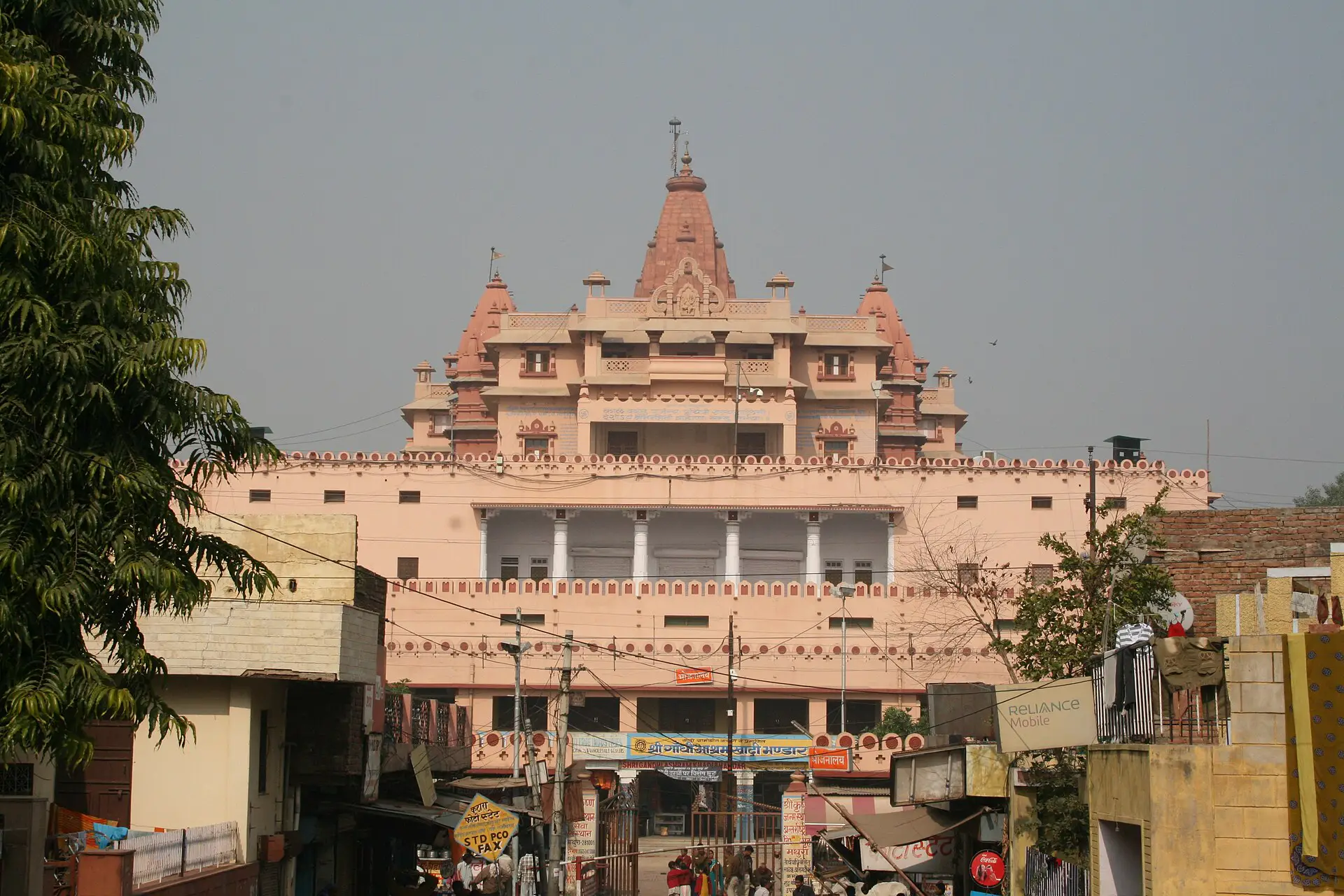
- Shri Krishna Janmabhoomi: The traditional birthplace of Krishna, with a temple complex that includes the prison-cell shrine and the Keshav Dev area.
- Dwarkadhish Temple: A beloved old-city temple known for its decorated darshans, haveli-style architecture and festival atmosphere.
- Vishram Ghat: The principal ghat on the Yamuna, where pilgrims bathe, rest and attend the evening aarti.
- Government Museum, Mathura: Known for its collection of Kushan and Gupta-era sculpture from the Mathura school, one of the great schools of ancient Indian art.
Area guides near Kusum Sarovar
Where to stay and how to get around in the localities closest to this place.
Nearby places worth adding
- Temple 1.5 to 2.5 hours
Shri Krishna Janmabhoomi
The traditional birthplace of Krishna, with a temple complex that includes the prison-cell shrine and the Keshav Dev area.
Why it is specialDevotees believe Krishna was born here to Devaki and Vasudeva in the prison of the tyrant king Kansa. The site has been venerated for many centuries and is one of the holiest places in the Vaishnava world.
Janmabhoomi RoadModerate walkingSecurity is strict. Mobile phones, bags and electronics are generally not allowed inside, and lockers or deposit counters are usually available nearby. Check current rules before you go.
- Temple 1 to 1.5 hours
Dwarkadhish Temple
A beloved old-city temple known for its decorated darshans, haveli-style architecture and festival atmosphere.
Why it is specialBuilt in the early nineteenth century and served in the Pushti Marg tradition of Vallabhacharya, it worships Krishna as the king of Dwarka. It is especially loved for its swing festival during the monsoon month of Shravan.
Old City, near Vishram GhatModerate walkingGets very busy during Janmashtami, Holi and Jhulan season. Darshan timings and any restrictions change, so confirm locally.
- Ghat 1 to 2 hours
Vishram Ghat
The principal ghat on the Yamuna, where pilgrims bathe, rest and attend the evening aarti.
Why it is specialAccording to tradition, Krishna rested here after defeating Kansa, which gives the ghat its name, meaning the ghat of rest. It is the central point of Mathura's riverfront and the traditional start and end of the town's parikrama.
Old City, riverfrontModerate walkingEvenings are atmospheric. Water levels and cleanliness vary, so pilgrims usually take a sprinkle or a boat ride rather than a full dip.
- Museum 1 to 1.5 hours
Government Museum, Mathura
Known for its collection of Kushan and Gupta-era sculpture from the Mathura school, one of the great schools of ancient Indian art.
Why it is specialMathura was a major centre of art under the Kushans, and its red sandstone workshops produced some of the earliest Buddhist, Jain and Hindu images. The museum holds famous pieces from this period, including a headless statue of the Kushan emperor Kanishka.
Museum Road, near Dampier NagarEasy walkingClosed on certain weekdays and public holidays. Confirm opening days before planning it.
Frequently asked questions
Where is Kusum Sarovar?
Kusum Sarovar is in Govardhan parikrama route, between Govardhan and Radha Kund, Mathura, Uttar Pradesh. We can include it in a Mathura sightseeing day with a private car and driver.
Why is Kusum Sarovar important?
The memorial pavilions were built in the eighteenth century by the Jat rulers of Bharatpur in honour of Maharaja Suraj Mal. In Braj tradition, this is where Radha gathered flowers and met Krishna, and the name means flower lake.
How much time do I need at Kusum Sarovar?
Allow 45 minutes to 1 hour. Festival days, weekends and holidays can take longer because of crowds.
Is Kusum Sarovar suitable for senior citizens?
Expect a moderate amount of walking, some steps or uneven ground. Most seniors manage with breaks and good footwear.